UtilDeco Group SRL has become Romania’s flagship work-integration social enterprise.
In 2023, it linked its textiles and coffee operations in a circular-economy pilot scheme: fabric off-cuts from uniform production and empty jute coffee sacks were upcycled into OPYA Fashion, a limited-edition collection of jackets, totes and accessories.
The enterprise is now scaling circularity through two major projects, one on digital product passports in textile products and the other on hiring workwear.
CirkArena is an R&D centre for the circular economy. Focusing on waste, it aims to help transform the local ecosystem and answer people's questions on the plastics value chain.
PSLifestyle is a free app that empowers individuals to better understand their environmental impact and supports them in adopting more sustainable and circular lifestyles. By providing personalized insights into users’ carbon footprints, it encourages changes in everyday consumption patterns that align with the principles of the circular economy.
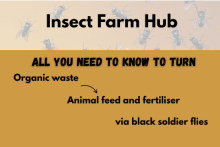
Insect farming is becoming more common, with plenty of people trying their hand at it. Like any other type of farming, however, it takes knowledge – and that is where Insect Farm Hub comes in. It aims to share knowledge about black soldier fly farming.
AIMPLAS has developed a device which demonstrates how the Digital Product Passport for plastic products will work. This tool provides essential information about the traceability, materials, recycling and carbon footprint of products.
The Green Growth project aimed to address the challenges of integrating the circular economy into the European construction sector through comprehensive training and capacity building for trainers.
Co-funded by the European Union's Erasmus+ programme, the project ran from 2020 to 2023. The project developed several key resources to embed circular economy principles into Technical and Vocational Education and Training (TVET).
The Western Balkans need to boost their capacity to implement circular economy concepts and practices that go beyond waste management. The CSCP, VITO and the European Environment Agency accordingly launched the Capacity Building on Circular Economy in the Western Balkans project.
RE-ZIP is an innovative, circular packaging solution designed to reduce waste in e-commerce. It provides reusable packaging options that replace traditional single-use packaging, helping e-commerce businesses lower their environmental impact.
Recycling flexible PET packaging is tricky because it is made up of layers but in Spain, recycled polyethylene terephthalate (rPET) is the only type authorised for post-consumer recycled content for food packaging.
The BOTTLE4FLEX project has taken up this challenge and aims to develop 100% recyclable flexible skinpack packaging using rPET.
The ECOFAP project aims to make shoe soles and heels from a material manufactured from tanned leather waste using 3D printing. This research project will help solve the problem of how to recycle leather scraps from the footwear manufacturing industry.