Unverpackt in Kiel opened in February of 2014, becoming Germany’s first packaging-free store. Their goal is to reduce packaging and food waste and at the same time motivate customers to reflect on their own consumer behaviour.
We are launching a Call for Expression of Interest for the new mandate of the European Circular Economy Stakeholder Platform Conference (ECESP), that will run from November 2020 to May 2022, open to stakeholders who wish to take part in this unique European initiative.
The second of four Thematic Working Groups created by the Interreg MED's Green Growth community was tasked with promoting green public procurement (GPP) by which public authorities seek to procure goods and services with reduced environmental impact throughout their life cycles.
This White Paper provides solutions for GPP and addresses issues linked to the lacking integration of sustainability and circular economy criteria in GPP and the provision of public services. It also highlights the need to develop the capacity of private actors to adopt eco-innovation and green energy in order to participate in green e-tenders.
The main objective is to examine public procurement in the context of long-term impacts, with specific attention paid to the role of public authorities.
Upcycling Scandinavia designs practical objects using upcycled materials such as paper, cardboard and pre-use plastic from industry. Its products are reusable and can be looped back into the manufacturing of new products.
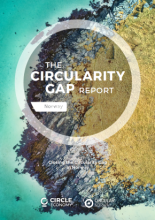
The Circularity Gap Report Norway is an in-depth analysis of how Norway consumes raw materials to fuel its societal needs. Currently, 97.6% of materials consumed each year never make it back into the economy.
Norway also has one of the highest per capita consumption rates in the world (44.3 tonnes per person). At 2.4%, its circularity rate is below the global average (8.6%). Each year Norway consumes 235 million tonnes of materials - metals, fossil fuels, biomass and minerals - to meet its internal needs.
However, the report reveals how Norway could see a 20-fold increase in its circularity by restructuring its businesses and industry through 6 key actions in the following fields:
The EU-funded DigiCirc project aimed to digitalise the circular economy by building on the innovation potential of SMEs in three strategic areas: Circular Cities, Blue Economy, Bioeconomy.
Open calls for each domain were launched to select 45 consortia of SMEs. The consortia took part in one of the three acceleration programmes to transform concepts into robust business models, a process which was completed in 2022. DigiCirc Open Courses disseminate the contents developed for the three acceleration programmes.
Lowlander is a beer brewery from the Netherlands that is passionate about brewing botanical beer. For the Tree to Table initiative, Lowlander has created a tasty, white IPA beer out of hand-picked needles from Christmas trees.