The ECESP leadership group on economic incentives is focusing on incentives with a specific potential for increasing the demand for a circular economy, and on policies and challenges such as circular public procurement, Extended Producer Responsibility, tax shift, CO2 pricing, etc.
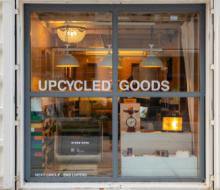
ReTuna Återbruksgalleria revolutionises shopping by being the world's first recycling mall in Eskilstuna, Sweden. ReTuna takes old items and gives them new life through repair and upcycling. The public can leave items in the recycling containers provided by the mall, and they are then redistributed to the shops.
The City of Helsinki’s Action Plan for the Circular and Sharing Economy is the updated version of the original roadmap of May 2020.
The Action Plan now extends to 2035. The focus areas are:
construction
procurement
environmental awareness and sustainable consumption.
Circular economy goals and measures are assembled under each focus area. The intention is to achieve the goals gradually.
Progress will be monitored using the Kiertotalousvahti service (Circular Economy Watch), and reported annually in the city’s environmental report and in the annual report of the European Circular Cities Declaration.
Swappis is a clothing retail store in central Budapest that attempts to counteract the linear approach of the fashion industry by introducing a business model that focuses on circularity and the reuse of second-hand clothes. Their membership loyalty mechanism is designed to build a strong relationship with customers by encouraging them to choose sustainable options.
FLOOW2 is working locally and internationally, to identify the need, and the opportunities of asset sharing for businesses by offering a sharing marketplace solution for every business, organization and network.
PharmaSwap is a unique sharing marketplace for pharmacists, hospital-based or otherwise. It creates transparency in the supply and demand for expensive medicines.
Complementerre38 obtains waste collection equipment, including end-of-life equipment, that are sold or donated, and gives them new life. In this way, the company provides a technical solution adapted to customer specifications that ensures the re-use of the equipment instead of it going to waste.
AIMPLAS, the Plastics Technology Centre, is coordinating a project called C-SERVEES to develop more circular products like washing machines, laser printers and toner cartridges, TV sets and telecom equipment.