The Horizon Europe project Hubs4Circularity Community of Practice is organising a workshop to discuss and reflect on the various funding and financing approaches relevant to the industrial-urban symbiosis community.
The 6th European Recycling Conference, organised by EuRIC in partnership with Assofermet, will take place on 26 September in Milan, under the heading 'Recycling Today, Resourcing Tomorrow'. This event will also celebrate EuRIC's 10th anniversary: a decade of commitment to circularity and sustainable recycling practices.
Organisations using the mark are required to submit their calculations and observations, providing a database of 11 projects to date, which has been analysed to identify patterns of adoption. OFRA has now issued a report on their findings.
In practice:
The minimum second life furniture percentage was 60%.
All projects would have been able to achieve cost savings on a like-for-like basis.
All projects are attractive; no compromise in aesthetics was reported or observed.
The Circular Cities Declaration, managed by our Coordination Group member ICLEI Europe, is is a project designed to help accelerate the transition from a linear to a circular economy with a specific focus on cities.
They've issued eight topical webinars with key stakeholders and institutions - and all of them are available for you to listen to!
On 17 and 18 June FOLOU and WASTELESS projects will be hosting a two-day webinar Current developments in food Loss & waste reduction. The aim of the webinar will be to unveil the current developments in food loss and waste reduction to pave the way for a sustainable future.
The European Economic and Social Committee will hold a public hearing in connection with its ongoing opinion on Aligning the circular economy and the bioeconomy at EU and national level. This opinion aims to enhance the synergies between bioeconomy, circularity and sustainability by promoting a more integrated and systemic approach to the circular bioeconomy.
The event will be webstreamed and interpreted into English, French and German. Participants will be able to interact.
BUILD UP, the European portal for energy efficiency and renewable energy in buildings, is hosting the third in a series of six webinars organised with the CircularB COST Action project. This one is on Investors, Developers and Insurance Providers.
It will explore successful projects and the challenges they face while implementing circular principles in the construction sector.
The FOODY EU project promotes entrepreneurial skills and employment of young people, using circular economy principles to combat unemployment. It provides comprehensive information on the management and environmental impacts of food waste, using the food industry and waste management sector to instill in young people the value of resource conservation.
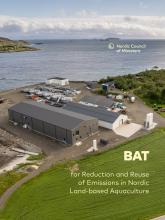
One advantage of land-based aquaculture is that emissions can theoretically be contained and reused. However, the techniques for doing so keep evolving. If the Nordic aquaculture industry is to grow in an environmentally sustainable manner, information is needed on the best available techniques.
The Nordic Council of Ministers therefore requested a report on the best available techniques for reducing and reusing emissions from land-based aquaculture. This report explores the state of play of Nordic aquaculture and takes stock of emerging and established techniques for reducing emissions and managing waste, with a focus on the circular economy. Improving waste management might improve the viability of land-based aquaculture, supporting the sustainable growth of this sector.
From 15 to 18 April, circular economy professionals from 168 countries came together at WCEF2024 to collaborate and turn ideas into action.
The Summary Report takes stock of the event: it presents the findings and key takeaways, including reports, tools and calls to action launched at the forum by partners, discussion highlights and key statistics.