THE LIFE BIOBEST project aims to guide the mainstreaming of best bio-waste management and recycling practices, with a view to enriching depleted soil with high quality compost.
Its Comprehensive Guidance sets out key policy recommendations to strengthen the EU legal framework for bio-waste management. Drawing from extensive research and stakeholder consultation, it outlines three interconnected areas for improvement: boosting effective models for separate collection and recycling, promoting reliable markets for compost and digestate, and enhancing monitoring and enforcement of bio-waste regulations.
It provides policy measures to help close the gap between current practices and potential capture rates, addressing the fact that only 26% of kitchen waste is collected separately in the EU.
This conference will focus on future-proofing clean energy, end-of-life assets, circular energy markets, and advanced technologies and successful business models.
Join top asset owners, recyclers, manufacturers and investors at the second Recycling Renewables Summit and help shape the future of circular renewables.
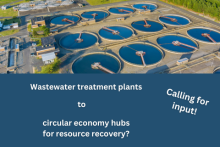
The ReLEAF and UPSTREAM projects are keen to promote the transition of wastewater treatment plants into circular economy hubs for resource recovery. They're asking for input.
The Commission has launched a consultation on harmonising the classification of certain waste types (“green-listed” waste) to facilitate their shipments across borders. It's open until 31 October and aims to gather input from a range of stakeholders on waste streams to be addressed. Let them know what you think!
STICA Climate Action Week 2025 took place just last month - and the interviews with various stakeholders which were released during it are now available. From the impact of climate change on workers to circular textiles made from waste, you're sure to find some in line with your area of interest!
International E-Waste Day on 14 October will focus on Critical Raw Materials, the elements that are mined in only a handful of countries and are crucial to foster the green and digital transition.
Organisations, municipalities, schools, businesses and individuals are invited to get involved!
The WEEE Forum aimed to formulate recommendations on potential future targets for WEEE collection and on the method for calculating the collection rate which would foster the circular economy.
This study accordingly conducted a comprehensive assessment of current WEEE collection rate calculation methodologies and proposes a new approach for setting WEEE collection targets in the EU. It took a multi-phase approach, including data collection, model development and sensitivity analysis. Interviews with experts and stakeholders were also carried out to validate assumptions and explore new target-setting approaches.
The study concludes that the WEEE generated method is preferable to the current POM (put on the market)-based collection target.
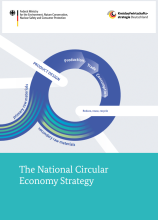
Germany's National Circular Economy Strategy adopts a strategic vision focused on reducing the consumption of primary raw materials. This approach is guided by the proposal from the International Resource Panel, under the United Nations Environment Programme (UNEP), which sets a global target of 6-8 tonnes of raw material consumption per capita per year by 2050.
The strategy considers every stage of the cycle: product design, material selection, production, maximising the use phase and, finally, reuse and recycling. It aims to prevent waste from being created in the first place. This can be achieved through smart product design, efficient manufacturing, extended product lifespans, easier repairability and maximising the recycling of all materials.
The ECESP Leadership Group on Textiles organised the #EUCircularTalks event on Circular textile policies: implementation, challenges and the role of the Circular Economy Act.
This webinar aimed to assess the state of play of circular textile policies in the EU, examining progress made, existing gaps and next steps.
FNADE will ask a highly relevant question: how can we make circularity an asset for competitiveness?
The congress will endeavour to identify levers for developing local production of materials and energy from the waste sector in France and Europe. It will also look at ways to reconcile regulatory simplification with the protection of the environment and human health.