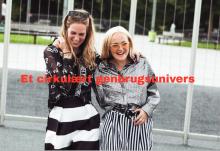
Based in the Danish capital Copenhagen, Veras operates several initiatives to reduce waste in the fashion sector by making it easy for everyone to swap and sell clothes. Veras is primarily an online webshop shipping to all Europe, where users can send in their own clothes. It also hosts weekly clothing markets for everyone to buy and sell clothing and has a flagship store in Copenhagen.
Trifilon uses a consistent source of plastic from a European stream and reinforces it with plant fibres, thus improving the properties of the recycled plastics. These can be used to produce a range of colours and surface finishes, matte or polished.
In 2017 JRK Waste management introduced an intelligent data system (ECONIT) to reduce the high quantities of mixed municipal waste in Czechia. The programme asks residents to scan their rubbish with QR codes. Information on the quantity and types of waste produced is then used by the local waste management agencies to improve collection and recycling rates.
Splosh sells its range of products – from detergents and fabric softeners to shower gel and hand wash – in bottles that can be refilled from their concentrated refill pouches. Buying refills in these pouches cuts plastic waste by 95%.
Since 2010, Philips has been working on introducing recycled plastics into its product portfolio. The baseplate of Senseo Original coffee makers, the company’s most popular model, has been changed to 95% post-consumer recycled plastic.
The EPA is seeking proposals from the research community to help identify solutions to climate change and other emerging and complex environmental problems.The funding will be provided under the four EPA Research 2030 interconnected research hubs, including "Facilitating a green and circular economy".
The European Environment and Sustainable Development Advisory Councils Network brings together advisory bodies offering independent advice to national or regional governments and parliaments on climate change, environment and sustainable development.
The vast majority of EEAC members work in particular on the transition towards a circular economy model. With representatives from academia, civil society, the private sector and public bodies, the EEAC network brings together experts with years of experience producing analysis and recommendations that should enhance the shift to a circular economy at sub-national, national and EU level.