Regenerating nature requires an economic transformation. To halt and reverse biodiversity loss, we need to fundamentally transform the way we produce, use, and consume our products and food. Conservation and restoration efforts alone – crucial though they are – will not be enough. The circular economy offers a framework for such a transformation. Applied together, its three principles are able to help tackle the root causes of biodiversity loss and enable the regeneration of nature. These biodiversity benefits can be demonstrated across different industry sectors, as shown in this new study by Ellen MacArthur Foundation. This paper also highlights the key steps businesses and policymakers can take to scale the circular economy potential and help shape a nature-positive future.
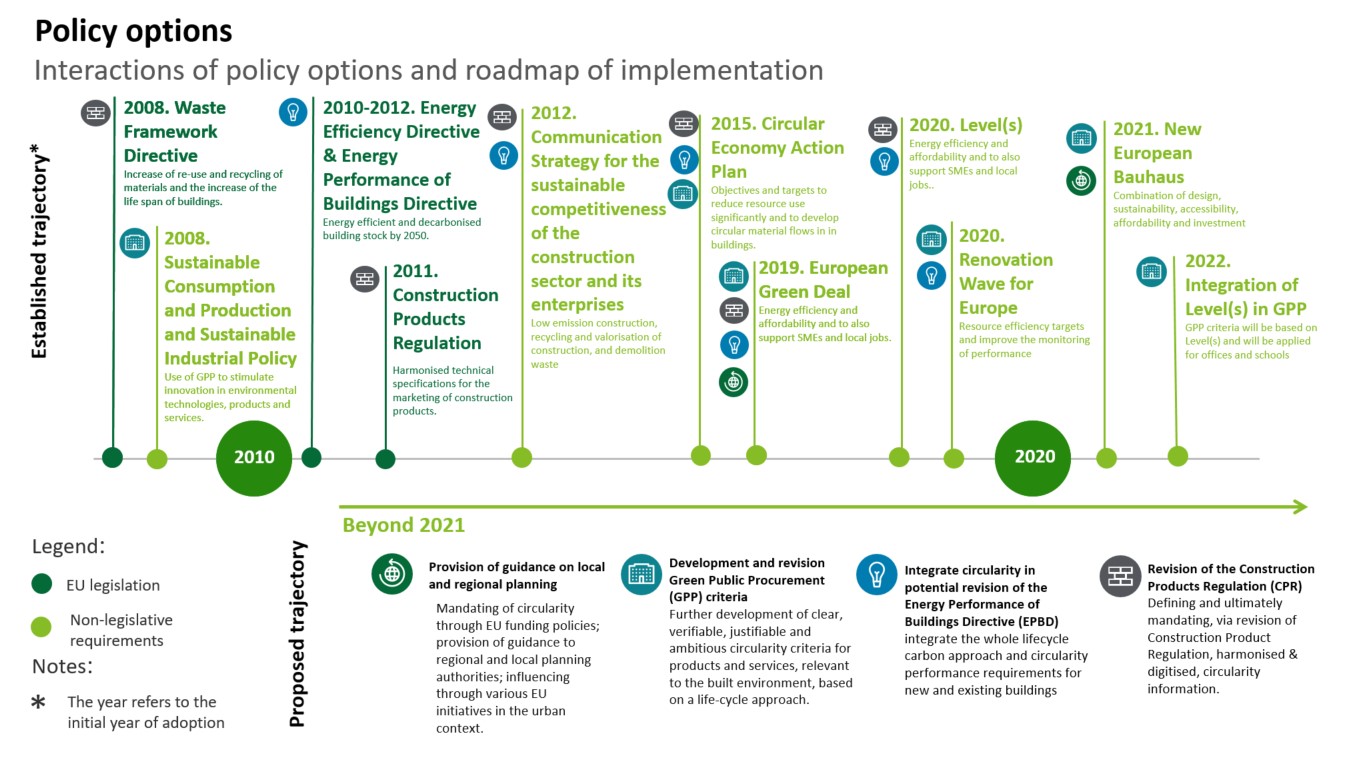
This study aims to assist the European Commission to identify policy options that support the uptake of circular economy principles for buildings’ design in European, national and local policies.
The goal is:
to increase the service life of buildings
to facilitate the use of secondary materials and
to improve resource efficiency across the building life cycle.
The study also provides key insights and recommendations on actions for a roadmap supporting the uptake and implementation of circular economy principles for buildings’ design.
The brochure Circular Cities shares knowledge and experience of circular solutions from the Netherlands to inform and inspire people and to stimulate international cooperation.
Ethical smartphones, multifunctional strollers, remanufactured milking robots and bicycles-as-a-service: the Dutch manufacturing industry offers plenty of inspiring and groundbreaking innovations for a circular economy. International cooperation is nonetheless crucial to deliver and accelerate the circular transition as the value chains of the manufacturing industry cover the whole world.
With this publication, Holland Circular Hotspot and the Dutch Circular Manufacturing Implementation Programme (UPCM) aim to bring insights and case studies from the Netherlands to an international level, in order to inspire everyone around the world to act and kickstart circular development.
Renewable energy technologies, such as wind turbines, solar photovoltaic panels and batteries, are essential for Europe’s transition to climate neutrality. Deployment, maintenance and replacement of this infrastructure requires significant resources, including many substances included in the EU list of critical raw materials.
Waste arising from end-of-life clean energy infrastructure is projected to grow up to 30-fold over the next 10 years, presenting significant opportunities to reduce consumption of scarce raw materials by recycling metals and other valuable resources back into production systems.
Circular economy approaches such as repair and upgrading of equipment and recycling of end-of-life infrastructure can underpin the sustainability credentials of EU renewable energy.
The extraction/processing of raw materials is associated with potentially significant environmental impacts, including contributing to approximately half of the greenhouse gas (GHG) emissions globally. In the EU, non-energy, non-agricultural raw materials account for 18% of GHG emissions associated with EU consumption.
Given the EU's commitment to reducing its GHG emissions, and the European Green Deal's aspiration to achieve a climate-neutral continent by 2050, mitigating climate impacts from raw material production is central to the EU's climate agenda.
All activities associated with collecting waste materials for recycling lead to GHG emissions. Especially for metals, however, their contribution to emissions is only a fraction of the emissions saved by not using primary metals.
This report is published by the Cyprus Federation of Employers & Industrialists (OEB), the Institute of Greek Tourism Confederation (INSETE) and the public policy consultancy adelphi (Germany) as part of the European project Hotels4Climate financed by EUKI.
The report aims to assess the current state of circularity in the hotel industry in Cyprus and Greece by conducting national surveys in both countries targeting hotels in order to:
identify the priority sectors within the main services offered by hotels, the business challenges and opportunities to move to circular economy,
create successful, flexible and resilient circular business models, and
identify a number of internal and external barriers that raise obstacles to the transition to circular economy.
The circular economy is an alternative to the dominant economic model, which causes considerable damage to the environment as it is based on the linear use of resources.
The development of the circular economy has been hindered by a number of economic, technological and regulatory constraints.
EpE's natural resources commission has spent three years identifying what makes circular economy initiatives successful. An analysis of 27 circular economy initiatives carried out by companies shows that partnerships are one key to overcoming these constraints. A closer examination of these partnerships sheds light on various forms of governance.
This report connects the potential for resource efficiency, via circular economy and the value-retention processes (VRPs), with a policy-relevant lens. It is one of the first to quantify the current-state and potential impacts associated with the inclusion of VRPs within industrial economic systems.
In order to do that the assessment applies the different VRPs to a series of products within three industrial sectors and quantifies benefits in relation to the original manufactured product, such as the material requirement, the energy used, the waste as well as the costs and the generation of jobs.
The report also highlights the systemic barriers that may inhibit progressive scale-up including regulatory, market, technology and infrastructure barriers, and how they could be overcome.
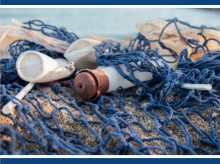
The International Resource Panel think piece provides policy options to reduce marine plastic litter and achieve the Osaka Blue Ocean Vision, which voluntarily commits G20 countries to “reduce additional pollution by marine plastic litter to zero by 2050 through a comprehensive life-cycle approach”.
The report shows the marine plastic litter trends relevant to 2050, summarizes the current plastic policy landscape and explores policy upstream and downstream interventions to reduce marine plastic litter and to transition to a circular plastic economy. They include, among others, actions to design out waste, incentivise reuse, and exploit market-based instruments.