To evaluate the impact of adopting circular economy principles in cities – in terms of emissions, quality of life and resilience – Enel and ARUP, with the scientific support of the Enel Foundation, have collaborated on a research project focusing on four cities: Bogotá, Genoa, Glasgow and Milan, all committed to enhancing the energy transition.
The study concerns three key urban sectors:
mobility
built environment
energy systems.
It entailed interviews with stakeholders and analyses of existing decarbonisation policies and circular strategies. A reference model was used to help identify the most significant circular actions that could lead to a reduction in GHG emissions in three sectors.
The results could be used as a guide for decision makers.
The Flemish Government wants to reduce the material footprint of consumption in Flanders by 30% by 2030. In order to know whether Flanders is on the right track and makes well-considered policy choices, data are needed. That is why Circular Flanders and the Circular Economy Research Centre launched the Circular Economy Monitor on 17 November.
Within the framework of the Circular Economy Initiative Deutschland (CEID) and its three interdisciplinary and cross-sectoral working groups, more than 130 experts from industry, science and civil society have summed up their findings in the Circular Economy (CE) Roadmap for Germany, which consists of a consolidated opinion addressing society as a whole.
This Roadmap, which has focused - right from the beginning - on shaping a consistent and common target vision for a circular economy in 2030, is a scientifically-based framework for action that systemically describes the necessary steps for Germany to transition to a CE and provides decision-makers from politics, industry and science with concrete recommendations for action.
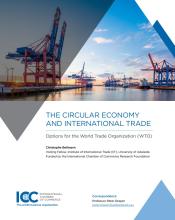
This study highlights that, while international trade has a vital role to play, policy responses to-date have largely been designed at the national level and in an uncoordinated manner.
ICC Secretary General John W.H. Denton says that "the report shines a light on how well-intentioned national policies are inadvertently hindering the adoption of circular solutions in the real-economy. Simply put: the transition to a circular economy can only be enabled at scale by harnessing the power of cross-border trade to unlock economies of scale and comparative advantages. We hope our analysis will serve as a clarion call for a concerted global effort under the auspices of the World Trade Organization to enable new patterns of trade capable of meeting global climate and sustainability goals".
Recycling is key for the circular economy. Chemical recycling could one day become a trouble-shooter solution for any remaining unrecyclable applications and replace incineration. However, it is not yet a sustainable technology.
Ecopreneur.eu - the European Sustainable Business Federation - has concerns about linear economy lock-ins, high CO2 emissions, competition with mechanical recycling, lack of scale, low quality, toxic residues and large investments being drawn away from SMEs going circular.
Therefore it advocates supporting the development of chemical recyclingonly if it is:
net-carbon positive,
used for otherwise unrecyclable residues,
with maximum quality,
scalable,
at costs reflecting the waste hierarchy, and
matched by equal support for SMEs on circular design.
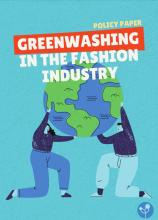
This policy paper sheds light on the false claims and misleading communication campaigns advertised by the fashion industry. It discusses the environmental impacts associated with these greenwashing claims in relation to three issues: materials, circularity and climate.
The paper further presents the most common statements and strategies used by fashion companies to convey their alleged engagement in environmentally sustainable practices.
Finally, recommendations are given on the policies needed on the EU-level to ensure that fashion brands are providing accurate and verifiable information to consumers, for them to make informed choices.
With this policy paper, Generation Climate Europecalls on the EU to address the growing issue of greenwashing in the fashion industry.
Circle Economy regularly reviews circular frameworks to help businesses identify the metrics that work best for them. The CIRCelligence indicators framework, designed by BCG and introduced in the paper Circular Metrics for Business - Introduction to the CIRCelligence indicators framework, helps businesses assess the circularity of their entire value chain, from input to end of life.
The authors of the study apply ascendency analysis (a systematic method based on information theory for quantifying the efficiency and resilience of natural ecosystems) at EU level and discuss the implications for urban waste management systems, taking the Netherlands as an example.
They argue that ecological principles can be useful for developing human-made systems. The system is made sufficiently robust to be able to cope with shocks by including a diverse set of stakeholders who provide:
resource-use efficiency through specialised know-how in capturing, processing and delivering a range of resources, and
resilience by generating multiple paths that allow these vital resources to circulate throughout the urban network at different levels and rates.
In Limbo is a platform (digital website and physical warehouse) facilitating the reuse of materials within thesocial and cultural sectors and schools in Brussels.
It encourages exchange and mutual aid within these sectors, as well as boosting recycling, reducing landfill costs and enabling organisations with limited resources to obtain reusable materials. Following the principles of circularity and sharing, all partners are invited to give and receive materials for free.
In Limbo is open only to registered partners which must be formal or informal non-profit associations or collectives, specifically social, cultural and artistic organisations, schools and temporary projects in Brussels. However, In Limbo accepts donations from all types of organisations.
Ekofungi is a Serbian company that takes a 100% circular approach to mushroom cultivation. It has pioneered a technology for sustainable cultivation of edible mushrooms using recycled cellulose waste. Each year, Ekofungi grows 130 tons of mushrooms which are either sold fresh or dehydrated and mixed with other vegetables.