From its base in the northern Netherlands, JC-Electronics supplies new, refurbished and repaired industrial electronics. By giving used and defective devices a second life, the company contributes to the circular economy and helps customers reduce their carbon footprint.
This UNEP report outlines what each stakeholder group can do individually and collectively to reach the shared destination of a circular textile sector.
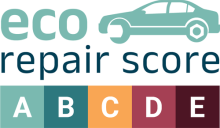
Eco Repair Score NV and VITO have developed the Eco Repair Score® to assess the environmental impact of a specific car repair job. It does this using a single score, with categories from A to E and associated colour coding.
RCA Engineering came up with modular plants for recycling composite materials. The modular engineering and construction process produced plants that can be assembled quickly and affordably.
Gravity Wave is a social start-up based in Spain. It focuses on working with small-scale fishermen to collect as much as possible of the plastic waste fouling the Mediterranean, from water bottles to a whole load of discarded fishing nets.
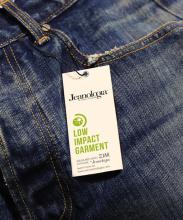
The Spanish company Jeanologia is currently spearheading the greatest challenge facing the textile industry: to achieve total dehydration and detoxification in denim industry. With Mission Zero the company is transforming the way jeans are made, from fabric to finish, minimising the use of water and chemicals to a close-to-zero target.
The Economy of Francesco is a platform set up upon a call from Pope Francis for young entrepreneurs, researchers and economists to work together to transform today’s economy with a view to combating the culture of waste and promoting social justice.
The initial call received over 3000 applications from 120 countries, showing that there is a whole community that feels deeply about this. Annual events are in line with the Ecology of Francesco's principles for reduced environmental impact.
EoF provides a regular programme of initiatives organised at regional or local level in the form of workshops, laboratories, seminars, conferences, round tables, calls for action and much more.
The catalogue, entitled "20 years of ecodesign - Made in Euskadi" and available in both physical and digital formats, is the first in Europe to compile a broad list of product categories from ten industrial sectors, namely the chemical industry, the metal sector, furniture, automotive, food, production and consumption, machinery, transport, electric-electronic, and the construction materials sector. Individual data sheets containing the main characteristics and aspects of each circular product are provided.
The publication illustrates how lifecycle analysis methodologies have been applied to substantially improve the environmental impact of these products and to serve as an example for the European industrial sector.
Although only 24% of the new circular solutions developed or demonstrated in the projects are already operational, the results of all the projects completed as of this date and validated by the companies have been included.
See also the website listing all the Basque Country's circular solutions to date.
150 livestock family farms have joined a bio-economy plant project in Alcarràs, Catalonia, a region with many livestock farms and fruit plantations. The project aims to manage manure in a more sustainable and circular way.