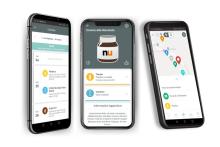
The Junker app recognises products with a single click on their barcode, and provides people with all the information they need to recycle their components correctly and quickly. It makes waste disposal easy!
Printer cartridges are seen as a single-use product by printer and cartridge Original Equipment Manufacturers. The DKWU Network is working to change that.
Interface's carpet tiles are designed along circular lines, and their ReEntry® programme ensures that old tiles are reused, recycled or used for energy from waste.
Volpy was an all-in-one ethical and environmental innovation on the smartphone market: customers could have their smartphones valued, return them and exchange with others directly through an app.
The Catalan Government considers that public procurement should be used as an instrument to support strategic policies in the transition towards the circular economy.
Since 2011, Closing the Loop has been operating a successful waste compensation model. It has developed a unique approach in which customers pay to compensate for the marketing of new electronic devices. The fee is used to collect scrap mobile phones and batteries via Closing the Loop's long-term networks in Africa for responsible recycling in Europe.
Information sharing, transparency and collaboration have been widely recognised as essential catalysts for a circular economy. To use one company’s ‘waste’ as ‘food’ for another, stakeholders need to access the right information at the right time. Information sharing often risks a stakeholder’s competitive advantage. Circularise develops an open communication protocol using blockchain technology.
By providing life cycle assessment data and information on the End of Life scenarios, the DGNB Navigator facilitates the application of the life cycle assessment method and fosters the use of circular economy suitable construction products.