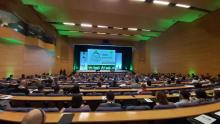
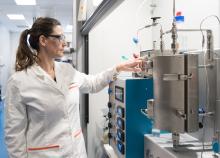
The sixth edition of MeetingPack, the event organised every two years by AIMPLAS and AINIA, will attract members of the entire food packaging value chain on 10-11 April 2024 at the Valencia Conference Centre in Spain.
Through the prism of the circular economy, MeetingPack 2024 will address the challenges and opportunities the sector is expected to face in coming years, as well as the latest innovations and trends in materials and barrier packaging.
This WCEF2023 Accelerator Session is a hybrid event taking place on 1 June. Its panel explores Vietnam's experience developing its Circular Economy roadmap, its learnings, and a way forward.
Four-day long celebration of the circular economy in Dublin running from 29 May to 1 June 2023. A unique gathering of international experts, industry leaders and forward-thinking individuals, dedicated to advancing the circular economy agenda.
The collaborative platform Economiecirculaire.org aims to organise knowledge about the circular economy and mobilise actors at regional, national and international level (French regions, Quebec, the Canton of Geneva and the southern Mediterranean).
Created in 2014 by CIRIDD, it is intended for all professionals able to implement, encourage or support projects on this topic (local authorities, companies, developers, consultants, experts, associations, etc.). It comprises 12 regional platforms.
This WCEF 2023 accelerator session on 1 June is focused on Africa's circular journey and the power of circular economy hubs. Speakers will discuss the unique opportunities and challenges in advancing the circular economy in Africa and review the role of hubs in connecting stakeholders and accelerating the transition to a circular economy.
The panel discussion is covering best practices, public-private partnerships, technology, financing, and capacity-building initiatives to support the growth of circular economy hubs in Africa. The session will end with an outline of future collaboration plans and encourage participants to continue the conversation beyond the session.
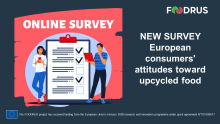
Researchers from the Food Design and Consumer Behaviour section of the University of Copenhagen are currently conducting a survey as part of the EU-funded FOODRUS project. The main objective of this research is to learn more about how European consumers feel about upcycled foods and what prevents them from consuming this type of food. All citizens are invited to fill out the questionnaire.
This year, ACR+ is organising not one but three events:
The ACR+ General Assembly 2023 (31 May) to help shape the direction of the network: organisations and ACR+ members will introduce, discuss and challenge ideas and solutions,
The Circular Economy Hotspot (29 May – 1 June), which will explore three key themes: Policy in Practice, Citizen Engagement and Innovation & Collaboration,
The 14th EWWR Awards Ceremony (1 June), which will assemble the 16 most outstanding initiatives on circular and sustainable textiles from among the 16 000 carried out during the EWWR 2022
Design requirements prescribed in the international Quality Management System standard ISO 9001 can also be interpreted from a circularity perspective. Designers can use ISO 9001 for designing "circular" products and services.
This article provides a few interesting examples of circularity linking them with ISO 9001 design requirements.
Threading-CO2 project aims to scale-up and demonstrate its first-of-its-kind technology producing high-quality commercially viable sustainable PET textile products from CO2 waste streams.
The overall objective is to significantly reduce the carbon footprint of the textile industry, using a circular manufacturing approach and running on renewable energy sources.
ED is a digital label providing information about the product's packaging: its components, the materials it's made of, and how to dispose of them properly.
All you need to do is scan the QR code on the packaging to get real-time, geolocated and accurate information on how to dispose of it.