Part of the FOODRUS project, this webinar on 25 April 2023 is the fourth in the Sustainable Food Systems Webinar Series which explores innovative solutions for surplus food loss and waste prevention.
The Confederation of Norwegian Enterprises (NHO), the Federation of Norwegian Industries, FoodDrinkNorway, the Norwegian Federation of Service Industries and Retail Trade and the Norwegian Seafood Federation have recently published a report on Extended Producer Responsibility (EPR) as an environmental policy tool.
The report emphasises the main considerations and assessments that should underpin EPR schemes and contributes to the debate on extended producer responsibility as an environmental policy tool in Norway, the EU and the OECD.
This webinar on 11 April follows the European Commission’s proposal for the European Critical Raw Materials Regulation on 16 March 2023. It aims to explore some of the opportunities and challenges linked to the EU’s new strategy for securing the supply of CRMs, both inside and outside the EU.
The regulation will have implications for the EU’s own internal environmental and circular economy-related objectives, as well as external impacts through shifts in demand for CRMs and trade flows. This event will identify focus areas for policymakers and the international community to ensure that the objectives of the regulation can be achieved by accelerating the shift to a global circular economy without hindering global sustainable development goals.
For the eighth time, the Cradle to Cradle NGO is inviting 1000 participants to come and debate and network at the International Cradle to Cradle Congress 2023 on 8 and 9 September.
The Congress will feature panel discussions with high-profile speakers from business, politics and science, good practices from established companies and start-ups, inspiring keynote speeches about the circular transformation of our society and many opportunities for networking.
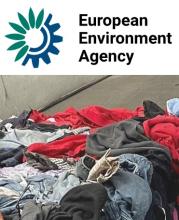
Textiles are on average the fourth-highest source of pressure on the environment and climate change from a European consumption perspective, as shown in previous EEA briefings.
Europe faces major challenges managing used textiles, including textiles waste. As reuse and recycling capacities in Europe are limited, a large share of used textiles collected in the EU is traded and exported to Africa and Asia, and their fate is highly uncertain.
The common public perception of used clothing donations as generous gifts to people in need does not fully match reality.
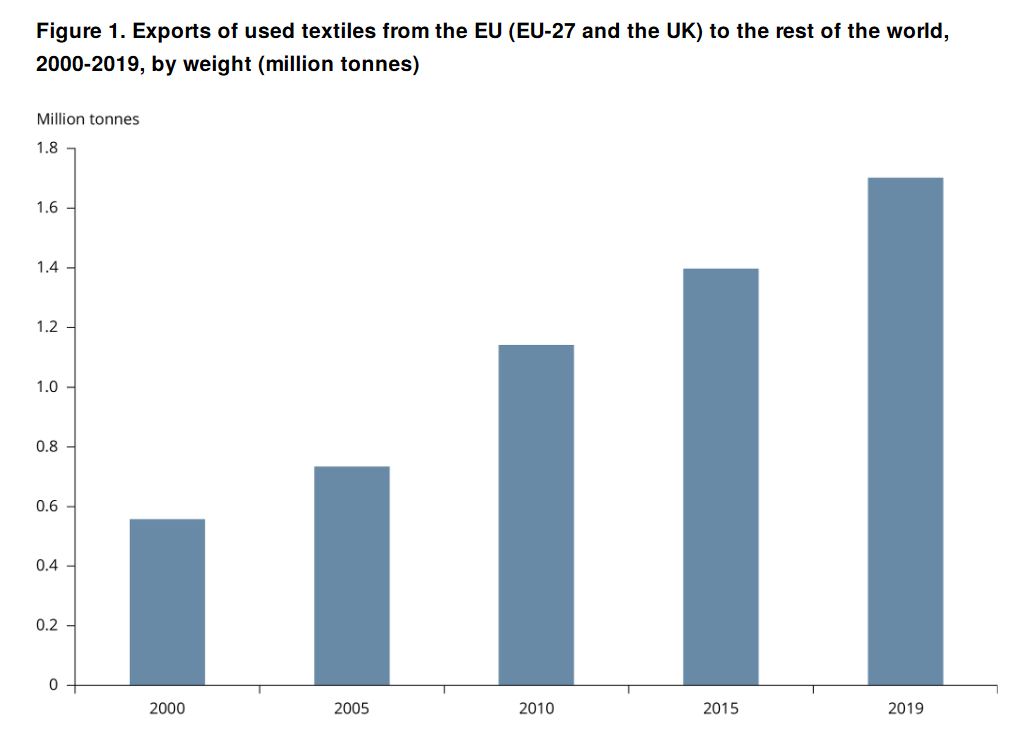
In the course of two decades, there has been a threefold increase in EU used textiles exports
The catalogue, entitled "20 years of ecodesign - Made in Euskadi" and available in both physical and digital formats, is the first in Europe to compile a broad list of product categories from ten industrial sectors, namely the chemical industry, the metal sector, furniture, automotive, food, production and consumption, machinery, transport, electric-electronic, and the construction materials sector. Individual data sheets containing the main characteristics and aspects of each circular product are provided.
The publication illustrates how lifecycle analysis methodologies have been applied to substantially improve the environmental impact of these products and to serve as an example for the European industrial sector.
The 70th session of the United Nations Economic Commission for Europe (UNECE) will take place in Geneva on 18-19 April 2023. The Commission is UNECE's highest decision-making body, and in this session it will take stock of its work to promote a circular economy and the sustainable use of natural resources, among other issues.
Interested in circular plastics? Join the interactive webinar "A Circular Economy for Plastics in Canada & the Netherlands" on 5 April to learn more about current policy approaches, best practices, latest technologies and market opportunities in the Netherlands and Canada.
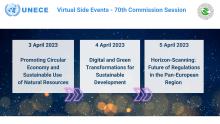
The 70th session of the United Nations Economic Commission for Europe (UNECE) will take place in April 2023 in Geneva. The Commission, UNECE's highest decision-making body, will take stock of its work to promote a circular economy and the sustainable use of natural resources.
Various virtual side events on 3-5 April will look at specific aspects of the circular economy transition, including the role of policies and institutions, innovation and private sector engagement, value chains, digital solutions and networks.