The Nordic Sustainable Construction programme (2021-2024) aims to deliver the Nordic Vision 2030, which seeks to make the Nordic region (Iceland, Finland, Denmark, Norway, Sweden, Greenland, The Faroe Islands and Åland) the most sustainable and integrated region by 2030.
The programme focuses on how construction can help create a green transition with green growth in the Nordic region by working towards carbon neutrality and a sustainable, circular and bio-based economy centred around knowledge, innovation, mobility and digital integration.
The collaborative platform Economiecirculaire.org aims to organise knowledge about the circular economy and mobilise actors at regional, national and international level (French regions, Quebec, the Canton of Geneva and the southern Mediterranean).
Created in 2014 by CIRIDD, it is intended for all professionals able to implement, encourage or support projects on this topic (local authorities, companies, developers, consultants, experts, associations, etc.). It comprises 12 regional platforms.
Is your country developing and implementing a national circular economy strategy? This is a unique opportunity to get your recipe book ready for creating a national circular economy strategy!
Finland, together with Germany, the Netherlands, the United Nations Environment Programme (UNEP) and the European Environment Agency (EEA), is organising a hybrid Accelerator Session on 1 June in connection with the World Circular Economy Forum (WCEF) in Helsinki.
This year, ACR+ is organising not one but three events:
The ACR+ General Assembly 2023 (31 May) to help shape the direction of the network: organisations and ACR+ members will introduce, discuss and challenge ideas and solutions,
The Circular Economy Hotspot (29 May – 1 June), which will explore three key themes: Policy in Practice, Citizen Engagement and Innovation & Collaboration,
The 14th EWWR Awards Ceremony (1 June), which will assemble the 16 most outstanding initiatives on circular and sustainable textiles from among the 16 000 carried out during the EWWR 2022
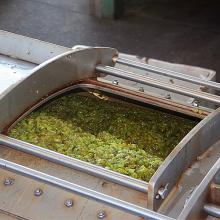
Arany Kapu (in English "golden gate"), a private company in Kunfehértó, Hungary, collects grape processing and winemaking byproducts from all the country's wine regions for valorisation in diverse forms, including distillation.
On 26 April the municipality of Wiltz, considered to be the "Municipal Hotspot of the Circular Economy in the Grand Duchy of Luxembourg", will hold the annual "Circular Economy Day" conference. This event aims to promote the circular economy at national and regional level by sharing the experience and know-how established through multiple projects and by activating and consolidating the network of stakeholders active in the circular field. The 2023 event will focus on urban metabolism.
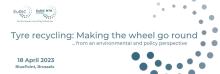
Tyres are complex products essential to the mobility of millions of Europeans. Likewise, tyre recycling is essential to the sustainability of the entire tyre value chain, be it in terms of resource efficiency or climate neutrality. Yet, despite a landmark landfill ban in 2006, much needs to be done to improve the circularity of tyres. To give an order of magnitude, today, for one tyre that is recycled, one tyre gets incinerated for energy recovery, and the worse in terms of end-markets opportunities is yet to come.
The EuRIC conference on tyre recycling takes place in Brussels on 18 April 2023.
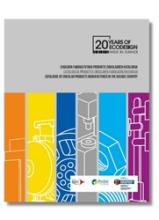
The catalogue, entitled "20 years of ecodesign - Made in Euskadi" and available in both physical and digital formats, is the first in Europe to compile a broad list of product categories from ten industrial sectors, namely the chemical industry, the metal sector, furniture, automotive, food, production and consumption, machinery, transport, electric-electronic, and the construction materials sector. Individual data sheets containing the main characteristics and aspects of each circular product are provided.
The publication illustrates how lifecycle analysis methodologies have been applied to substantially improve the environmental impact of these products and to serve as an example for the European industrial sector.
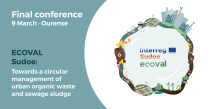
The final conference of the Ecoval Sudoe project (Coordination strategies for sludge and organic waste management and valorization in the SUDOE region) will take place in Ourense on 9 March 2023, where the main results of the project, started in November 2020, will be presented.
The European Commission, with Studio Feschi&Soci, Green Soluce, Alda and ACCIO, is organising a capacity-building event on the Environmental Footprint methods on Tuesday 28 February 2023 from 10:00 to 14:00 CET in Barcelona, Spain.
This will be a local event held mainly in Spanish, but it will be organised in hybrid format to enable remote participants to join.