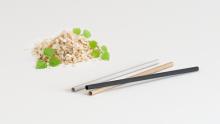
Sulapac has developed a fully biodegradable and microplastic-free material which can replace plastic. The bio-based material is both recyclable and mass-producible and is available as granules or final products.
Circular Conversations is an independent and decentralised community platform showcasing solutions for systemic change.
It tells stories of change to promote the dissemination of ideas and practices able to move us forward in the transition towards a regenerative and distributive economy.
Building upon its vision of systemic change, the forum aims to engage local communities and people around the world through its work at the intersection of four pillars: science, entrepreneurship, art and community engagement.
Its Research Series provides researchers with a platform to present their innovative research.
The Pioneers project shines a spotlight on global innovation champions.
The Expert series explores issues such as is the future of African prosperity circular?
Founded in 2012 with the objective of creating high-quality eyewear from oil-free or recycled materials, producing Dick Moby sunglasses and eyeglasses follows a circular approach: lowering environmental compared to similar fashion accessories.
Inaugurated in 2016, Mater-Biotech is the first world industrial plant for the production of 1.4 bio-butanediol (BDO) directly from sugars, paving the way for the production of new chemical intermediates from renewable sources. The plant was designed to reuse the by-products for its energy needs, thus optimizing the life cycle of the entire process.
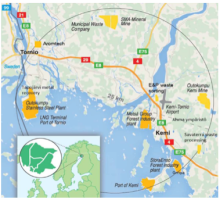
The Circular and Bioeconomy Centre is based ona cross-sectoral industry co-operation involving mining, metal, and forest industries and service companies in the Kemi-Tornio economic region, and accounts for about 80 % of Lapland's industrial production.
Funghi Espresso is an innovative business that produces fresh mushrooms in a sustainable and natural way, using coffee grounds from local bars and restaurants as a growing medium.
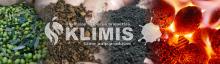
KLIMIS has been using the woody part of Greek olive pits as heating fuel for its lime production since 1968. In 1992, it developed a patented process to recycle the residual material from this combustion into highly-efficient, low-emission barbecue briquettes.