The textile and apparel value chain is one of the most resource-intensive sectors, generating significant waste and relying heavily on a vulnerable workforce.
In recent years, businesses in this sector have adopted circular economy strategies to address sustainability challenges. However, most of these efforts focus on material efficiency and waste reduction, often neglecting social dimensions.
This PhD dissertation addresses this gap by exploring how to integrate social justice and equity into circular transitions at the business level. Through case studies in the Netherlands, Spain and India, it investigates how businesses can adopt circular practices inclusively and how policymakers can enable a more just circular transition.
The transition to a circular economy in the textile and apparel value chain is an opportunity to address the environmental challenges facing the industry. However, without a strong focus on social justice, this transition risks perpetuating poor working conditions, gender inequality and vulnerability for workers, particularly in low-wage, labour-intensive roles.
This policy brief identifies five key recommendations for policymakers:
Align circular economy goals with just transition principles
Identify and protect vulnerable populations
Address income disparity and strengthen labour regulations
Enhance participatory mechanisms and access to justice
Implement restorative mechanisms and support reskilling initiatives
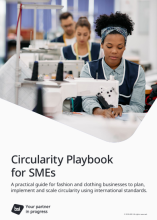
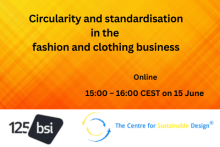
This webinar will explore the evolving regulatory and standards landscape that is reshaping the EU's fashion and clothing industry towards a circular economy. From the Ecodesign for Sustainable Products Regulation including Digital Product Passport and new Extended Producer Responsibility obligations to the practical role of international standards in achieving compliance, this session will provide essential insights into the critical changes ahead and the potential impact on SMEs.
This collection of businesses in the Region of Murcia which are delivering on circular economy principles is an interactive tool. It is intended to be a source of inspiration and information: users can search for businesses active in specific sectors or focusing on specific circular economy principles.
This webinar will explore the international used clothing trade.
It will present the report on From Collection of Used Clothes in Sweden to Reuse in Kenya: A Case Study of Humana LT’s Value Chain for Second-Hand Clothes and look at the economic and environmental value of second-hand clothing exports and how policy can best support circular textile flows.
This webinar will explore the forthcoming Digital Product Passport (DPP) requirements and their potential impact on the fashion and textile industry, with a particular focus on small and medium-sized enterprises in the EU.
The Zero Waste Action Weeks are all about waste prevention and resource conservation, covering upcycling, repairing, food rescue, circular economy, reuse, sustainable consumption and zero waste fashion.
Come and experience the hands-on sessions, lectures and workshops!
Interact and the EUSALP presidency invite you to a dynamic workshop showcasing good practices and solutions developed by Interreg projects in the circular economy field.
STICA Climate Action Week 2025 took place just last month - and the interviews with various stakeholders which were released during it are now available. From the impact of climate change on workers to circular textiles made from waste, you're sure to find some in line with your area of interest!
Germany's National Circular Economy Strategy adopts a strategic vision focused on reducing the consumption of primary raw materials. This approach is guided by the proposal from the International Resource Panel, under the United Nations Environment Programme (UNEP), which sets a global target of 6-8 tonnes of raw material consumption per capita per year by 2050.
The strategy considers every stage of the cycle: product design, material selection, production, maximising the use phase and, finally, reuse and recycling. It aims to prevent waste from being created in the first place. This can be achieved through smart product design, efficient manufacturing, extended product lifespans, easier repairability and maximising the recycling of all materials.