The Ellen MacArthur Foundation is a UK charity which aims to speed up the transition to the circular economy. Since it was set up, the charity has emerged as a global thought leader, putting the circular economy on the agenda of decision makers across business, government and academia.
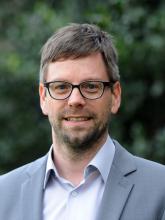
Carsten Wachholz joined the Foundation in 2020 after spending two years working for the European Investment Bank on Corporate Responsibility and another four years working for the European Environmental Bureau on the first EU Circular Economy Action Plan. Carsten leads the Foundation's newly established Brussels-based team supporting the development of circular economy policies at EU and international level (e.g. G20, OECD), in close collaboration with the Foundation's systemic initiatives on plastics, fashion and food.
This hybrid session on 8 June explores the linkages and concrete actions that should be considered by investors and project owners when developing circular and long-lasting, place-based skills and workforce.
Eclaira is the regional collaborative platform dedicated to the circular economy in the French region Auvergne-Rhône-Alpes. Managed by CIRIDD, it aims to:
Shine a spotlight on initiatives carried out in the region
Encourage collaborative projects in the circular economy
Promote the implementation of the circular economy in the region
The platform enables users to stay abreast of circular trends and events, network, forge partnerships and join projects, use tools and tell other people what they have been doing.
It publishes technical reports and focuses on three areas: water, biodiversity and textiles, tackling each from the perspective of the circular economy. There is also a toolbox.
For the eighth time, the Cradle to Cradle NGO is inviting 1000 participants to come and debate and network at the International Cradle to Cradle Congress 2023 on 8 and 9 September.
The Congress will feature panel discussions with high-profile speakers from business, politics and science, good practices from established companies and start-ups, inspiring keynote speeches about the circular transformation of our society and many opportunities for networking.
Join the European Commission Green Public Procurement Helpdesk's webinar on Public Procurement of Green and Circular Skills, which will take place on 10 March at 10:00 - 11:30 CET and is free of charge.
The webinar will analyse how public procurement can be used as a strategic tool that can support the upskilling and reskilling of the workforce and help futureproof the IT and furniture sectors.
The World Circular Economy Forum 2023 will be held in Helsinki from 30 May to 2 June 2023. This global collaboration forum is co-organised by Finnish Innovation Fund Sitra and Nordic Innovation, with international partners. It will attract more than 2 000 leading circular economy players in the world to Finland to find circular solutions that can help our economies fit within the boundaries of nature. Part of the programme will also be accessible online.
The innovation cluster Circular Saxony aims to re-design products and processes in line with circularity and sustainability, while lowering the costs of society's transformation towards climate neutrality.
It brings together industry, research and policy representatives in thematic working groups which will work on practical solutions within the region of Saxony.
Goals:
Foster collaboration across sectors and technologies among SMEs, large enterprises, research organisations, associations and policymakers in Saxony
Transfer knowledge
Facilitate projects for members
Set up pilot lines and digital networking technology
Increase quota of materials kept in the loop for all relevant materials
The World Circular Economy Forum 2022 presents circular economy game-changers. Hosted in Kigali and online on 6-8 December 2022, WCEF2022 is co-organised by the African Circular Economy Alliance, the Republic of Rwanda, the African Circular Economy Network (ACEN) and The Finnish Innovation Fund Sitra, with international partners. The title for this year's event is 'From Africa to the World'.
The TwinRevolution project supports Vocational Education and Training (VET) learners from the textile and furniture industries on their green and digital transition journey.
By improving their digital and green skills, the project wishes to prepare professionals from both industries to meet the requirements of a sustainable, circular and digitally enabled industry.
The Blueprint bridges key enabling technologies with circular strategies to be implemented in the textile and furniture industries, compiles and analyses European policies that influence the twin transition and the current approach to VET, and defines the necessary learning outcomes to reskill current and future workforce.
In September 2019, nine Resourceful Cities embarked on their journey to develop next-generation urban resource centres as a way to accelerate the transition to a circular economy.
The nine cities together with their local stakeholders were all able to deliver a high-quality Integrated Action Plan. Every one of those action plans is not just an expression of their resilience in times of crisis: it is also a manifestation of their individual response to their local context and needs.
This publication summarises their collective journey as a network and tells the story of each of the nine partner cities from their own perspective. Their journey shows that cities are big enough to make a difference and small enough to make it happen.