The Roadmap - Towards the Circular Economy in Montenegro aims to steer the transition to a circular economy in Montenegro. It is based on systemic thinking and outlines the main drivers, horizontal and priority areas, opportunities for circular transformation and recommendations for the way forward.
The strategy identifies five focus areas (food and forest systems, the built environment, tourism and manufacturing) that are highly interconnected and, through the principles of industrial symbiosis and synergies, can result in systemic change.
The roadmap is an outcome of collaboration between the Montenegrin Chamber of the Economy, UNDP, Circular Change and Deloitte BiH.
Food waste causes loss of materials and energy, environmental damage and negative effects on people's health and quality of life. In response to this, two Italian consumers' associations have decided to provide a series of nationwide services and activities, investing in innovative tools that promote the information needed to curb daily food waste.
The slow flower movement is growing in Europe and aims to provide local, seasonal and organic flowers. Why? Because the international flower industry is very harmful to nature and has major negative impacts in developing countries.
The European Commission is preparing a legislative proposal on the Right to Repair, headed “Sustainable consumption of goods – promoting repair and reuse”. The overall goal of the initiative is to extend the time during which consumers use the product before discarding it.
The public consultation and call for evidence are currently ongoing and will run until 5 April 2022.
Clear Fashion, independant expert of garment evaluation, is a solution that informs consumers on brands' practices and clothes' impact, and enables fashion brands to communicate their scores, in order to bring more transparency in the fashion industry.
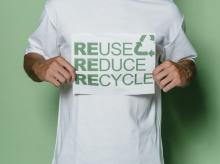
The goal of the circular economy is to take full advantage of all available resources through reducing, reusing, repairing and recycling. The recent Nordic Circular Summit in Copenhagen covered topics from public administration programmes to innovative techniques and renewable practices in the marine and food industries.
What can we learn about the circular economy from the Nordic perspective? Find some answers in this position paper.
In 2021, the Leadership Group on Retailers, Consumers and Skills considered issues such as how to made the electronics sector more circular, how to boost public awareness of the need to become more circular and how to step up training with a view to reskilling and upskilling.
Madeira Circular brings together key actors for the transition to the circular economy in the Autonomous Region of Madeira. This includes civil society, businesses, public administrations and the scientific and academic communities.
It looks at regulations and financing and explores sectors relevant to Madeira which can be shifted to a more circular approach, such as tourism, production of local products and civil engineering.
The platform looks at recycling and how to combat food waste and provides recommendations in the fields of water, waste and energy.
This report is part of the ongoing research conducted by the Circular Economy Policy Research Center on creating a framework for a monitor to guide the transition to a circular economy in Flanders. It presents a set of indicators for the system of consumer goods, revealing how this system performs in relation to circular economy principles.
The European Commission has launched a public consultation on the rules on compensation for damage caused by defective products. A specific focus will be on the use of artificial intelligence in products and services. You can take part in this consultation until 10 January 2022, thus contributing to the process of further developing and fine-tuning this initiative.