This series of webinars - each aimed at a specific target audience and hosted by BUILD UP - will highlight how different stakeholders could join forces to reskill and upskill the building sector workforce with circular skills by highlighting the main takeaways and outcomes of the EU-funded project BUS-GoCircular.
Public authorities - policymakers, procurement professionals, local and regional authorities, and other public sector actors - have an important role to play in the transition towards a more circular built environment and have a range of policy levers at their disposal to stimulate demand for circular skills. Using circular strategies in the built environment can help reduce the embodied emissions of building materials by 50%.
This interactive webinar will show how to train staff and how local authorities can work with stakeholders to train the whole value chain to promote circularity.
The webinar will present the guidance for policymakers as well as training materials developed by the BUS-GoCircular project. It will also explain how public authorities can use the Fundamentals Training Packs for SMEs in their requirements in tenders.
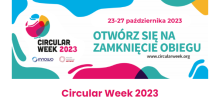
Circular Week, an international series of events dedicated to sustainable development and the circular economy, will take place this year from 23 to 29 October.
Look through the full agenda of events and sign up!
The Circular Republic Festival will take place from 15 to 18 November 2023. Join top circular economy visionaries for innovation, networking and inspiration. Showcase initiatives, meet relevant players and be inspired by good practices. Experience keynote speeches, panel discussions, workshops and online collaboration. We want to accelerate the circular economy together!
The Ellen MacArthur Foundation is a UK charity which aims to speed up the transition to the circular economy. Since it was set up, the charity has emerged as a global thought leader, putting the circular economy on the agenda of decision makers across business, government and academia.
The Ellen MacArthur Foundation is a UK charity which aims to speed up the transition to the circular economy. Since it was set up, the charity has emerged as a global thought leader, putting the circular economy on the agenda of decision makers across business, government and academia.
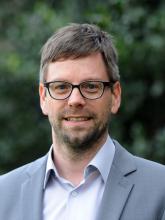
Carsten Wachholz joined the Foundation in 2020 after spending two years working for the European Investment Bank on Corporate Responsibility and another four years working for the European Environmental Bureau on the first EU Circular Economy Action Plan. Carsten leads the Foundation's newly established Brussels-based team supporting the development of circular economy policies at EU and international level (e.g. G20, OECD), in close collaboration with the Foundation's systemic initiatives on plastics, fashion and food.
The Nordic Sustainable Construction programme (2021-2024) aims to deliver the Nordic Vision 2030, which seeks to make the Nordic region (Iceland, Finland, Denmark, Norway, Sweden, Greenland, The Faroe Islands and Åland) the most sustainable and integrated region by 2030.
The programme focuses on how construction can help create a green transition with green growth in the Nordic region by working towards carbon neutrality and a sustainable, circular and bio-based economy centred around knowledge, innovation, mobility and digital integration.
This paper analyses CE policies and discourses in three European cities to draw critical insights and recommendations.
It first reviews the academic literature on urban CE policies to develop a new conceptual framework for analysing CE discourses and policies. This is then used to analyse and compare the CE policies of Glasgow, Amsterdam and Copenhagen.
Results show that technocentric approaches to the CE are dominant in the three cities. Moreover, they have very limited social justice policies for fair distribution of the costs and benefits of a CE transition. Key policy recommendations to address these shortcomings are thus proposed.
The insights offered by this paper are valuable for practitioners and academics seeking to improve urban CE policies.
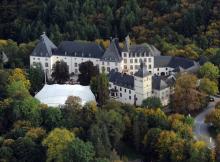
On 26 April the municipality of Wiltz, considered to be the "Municipal Hotspot of the Circular Economy in the Grand Duchy of Luxembourg", will hold the annual "Circular Economy Day" conference. This event aims to promote the circular economy at national and regional level by sharing the experience and know-how established through multiple projects and by activating and consolidating the network of stakeholders active in the circular field. The 2023 event will focus on urban metabolism.
For the eighth time, the Cradle to Cradle NGO is inviting 1000 participants to come and debate and network at the International Cradle to Cradle Congress 2023 on 8 and 9 September.
The Congress will feature panel discussions with high-profile speakers from business, politics and science, good practices from established companies and start-ups, inspiring keynote speeches about the circular transformation of our society and many opportunities for networking.