The New Circular Economy Action Plan identifies textiles as a key product value chain where there is potential to boost the EU market for sustainable and circular textiles. The European Commission has launched a public consultation to gather input on challenges and gaps as well as opportunities for the sector towards sustainability.
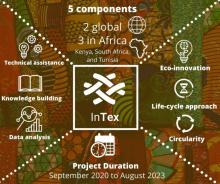
"Innovative Business Practices and Economic Models in the Textile Value Chain" (InTex) is a three-year UNEP project funded by the European Union. The InTex project has five components, two with global reach and three focusing on national implementation in three African countries: Kenya, South Africa and Tunisia.
The 2021-2027 programme for Environment and Climate Action (LIFE) will become the EU’s most ambitious climate and environmental programme. It will enter into force retroactively from 1 January 2021.
Commissioned by the Scientific and Technical Advisory Panel (STAP), which advises the Global Environment Facility (GEF), and co-authored by Circle Economy and Shifting Paradigms, this report uncovers the range of socio-economic and environmental co-benefits that circular mitigation interventions can bring to GEF countries of operation.
The report supports strategic advice by the STAP to the GEF and its implementing partners, and helps carve out a role for these bodies in accelerating the transition to a low-carbon circular economy. Its findings will be highly relevant to the development of future GEF projects and programmes across its different focal areas.
Every day, it is clearer that we cannot lose any more time in switching away from a linear economy. The climate emergency together with the economic crisis bringing the region to its knees are basically a perfect storm: to avoid being hit by it, we need to make an eco-innovative transition a priority if we want a more sustainable future for the Mediterranean.
The term "eco-innovation" basically boils down to innovation. What does eco-innovation really mean? And what is the link between eco-innovation and a more circular economy, particularly in the Mediterranean region?
A wide range of initiatives and programmes point towards innovation being key to enabling green growth. Eco-innovation and the circular economy: are they two sides of the same coin?
It is becoming clearer - and more urgent - every day that we need to abandon the linear economy. The climate emergency together with the economic crisis that the region is experiencing makes a transition based on eco-innovation a priority for a more sustainable future for the Mediterranean.
Spain manufactures 14% of all agricultural plastics in Europe. To optimize recovery of mulch films in the form of quality compost, AIMPLAS is developing the AGRO+ Project with funding from the Valencian Innovation Agency (AVI)
The Grand-Duchy of Luxembourg is a frontrunner in many economic sectors, including finance, construction, data-driven innovation and space resources.
In recent years, the country has sought to position itself as a hotspot for the circular economy (CE) and many ongoing public and private initiatives support this claim.
Based on these fruitful experiences and the recognition of the CE as a high priority by the Luxembourg government, which has made it a major feature of the 2018-2023 Government agreement, the current strategy aims to take the CE in Luxembourg to the next level. It identifies proven regulatory, financial and information management methods and tools for boosting circular initiatives, and proposes a methodology for using them in a number of key economic sectors.
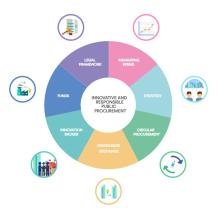
This E-Learning module on Innovative and Responsible Public Procurement guides learners, for instance, through the process of building a procurement strategy and procuring in a circular way.
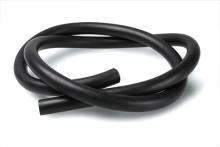
Cikautxo worked with the TAPA (ThermoplAstic fluid handling Pipes for cooling circuits in Automotive sector) project, funded by EIT RawMaterials, to develop new materials for pipes and hoses. They substituted natural rubber with a 100% recyclable thermoplastic material (thermoplastic elastomeric, TPE), using energy-efficient extrusion technology.