The Circular Navarre Catalogue 2022 is an update of the showcasing booklet published in 2020 and in 2021. This new edition includes 50 organisations - based on circular business models - in the Spanish Navarre region, looking for international cooperation.
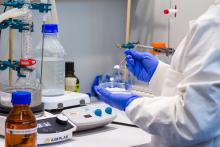
Blue Plastics technology, called CleanBlueTech, is a pioneering, solvent-based, closed-loop washing technology that removes smell, glue, print-ink and organic residues from any plastic flexible film waste.
CleanBlueTech is a game changer as it uses 70% less energy and 100% less water than existing technologies.
The European project BeonNAT aims to develop innovative biological products for the industry from the biomass of trees and shrubs grown on marginal land. The Plastics Technology Centre Aimplas will generate lactic acid and then polylactic acid PLA from fermentable sugars in biomass waste for use in packaging with active properties for cosmetics.
On 13 October, more than 50 countries around the world celebrate the World Ecolabel Day to honour credible ecolabels that are members of the Global Ecolabel Network. These so-called type-I ecolabels are awarded to goods and services meeting high environmental standards throughout their entire life cycles.
The students' call for Circular Economy Innovative Projects (Navarra Circular Economy Awards 2022) is open until 25 September 2022. It is geared to the textile and plastics sectors as well as food industries. The call seeks to identify vocational education and training final projects, final degree projects, Master's final projects, PhD theses or similar developed by students.
The ITENE Research Centre is a Knowledge Transfer Office, set up in 1994.
ITENE provides companies with cutting-edge knowledge and technology to build a safer, more sustainable future. It aims to generate scientific and technological knowledge that it transfers to companies through R&D and innovation projects and consultancy, testing and training services.
It delivers solutions in four main areas:
sustainable materials and technologies for the circular economy;
design, safety and functionality in packaging;
chemical exposure and air quality monitoring;
logistics and smart mobility.
Current projects include FLEXIZYME: Flexible and adaptable enzyme biotechnology platform for the sustainable industrial production of bio-based fatty amines from waste.
Following the success of the sixth European Food & Beverage Plastic Packaging Summit which brought 100+ senior industry professionals to Antwerp in February 2022, the event will be returning to Belgium. The seventh Summit will take place in Antwerp on 15-16 February 2023.
The Ocean Package UG is a young and sustainable company from Munich with the goal to make e-commerce more environmentally friendly and sustainable. For this purpose, they have designed reusable packaging made of recycled polypropylene, which contains a proportion of collected plastic from the North Sea. Their product can be used 20 times more often than conventional cardboard packaging.