The European Commission is organising a series of targeted stakeholder workshops to gather input on challenges and gaps as well as opportunities for the textile sector towards sustainability.
The first workshop on 26 May 2021, at 13.30-17.30 CEST, focuses on “management of used textiles”.
Mamukko is an Irish company, founded in 2011, that uses waste nautical materials as a secondary raw material. They promote upcycling by using end-of-life sails, decommissioned life rafts and recycled leather to make bags.
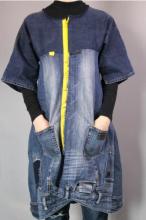
ZĪLE is a Latvian fashion brand which develops its clothing while looking at a sustainable future, through the concept of upcycling. The label’s main resource materials are denim trousers, men’s shirts and imagination.
LENZING™ ECOVERO™ produces a sustainable and fully biodegradable fibre brand for apparel. It is developed from renewable pulp and wood sources. Importantly, the wood which serves as raw material come from certified sustainable sources.
Circular Berlinis an NGO that focuses on making Berlin circular.
Berlin is envisioned as a resilient, citizen-oriented region where resources are sourced locally and their value is maintained as part of a continuous loop. Circular Berlin operates across areas such as community-building and education, as well as developing knowledge about industries with a high potential for circularity: the built environment, food and biomass, textiles and fashion, materials and products.
Circular Berlin hosts events where the community comes together to talk about key issues from sharing knowledge to collaborative planning sessions. Open-source digital tools enabling information to be exchanged more quickly have been built.
For more information on Circular Berlin, see their report.
I:CO is an international circular solutions provider for the collection, certified sorting, reuse and recycling of clothing and shoes. They aim to support innovative new recycling technologies which help close the loop of production cycles.
The Royal Swedish Academy of Engineering Sciences (IVA) has issued a report on how to make the textile sector more sustainable. It provides proposals for a more resource-efficient and smart textile sector, covering topics such as challenges and definitions of solutions towards a smarter sector. It suggests, for instance, to introduce tax relief programmes and industrial parks for resource-efficient textile production.
This report is one of several sector reports from IVA project Resource Effectiveness and Circular Economy (ReCE). The purpose is to make Sweden more competitive in a future with finite resources in line with the UN’s Sustainable Development Goals.
The project has established platforms for dialogue between actors in the public and private sectors.
Better World Fashion produces new quality products from waste materials. Their primary material, leather, is from discarded post-consumer products collected by NGOs.