The EU Food Loss and Waste Prevention Hub is a one-stop-shop for stakeholders active in the area of food loss and waste prevention and reduction, across the EU and beyond. It's a source of information on what's going on in this community!
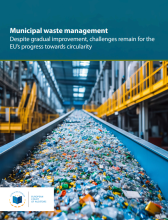
This audit aimed to evaluate the action taken by the European Commission and the Member States with a view to achieving the EU’s objectives for municipal waste.
It assessed whether the Commission’s legal initiatives and enforcement were fit for purpose; whether the four sampled Member States have made good progress in achieving EU waste targets and objectives; and whether the 16 sampled projects in these Member States – co-financed with EU funds – were implemented well in terms of time, cost and capacity.
The audit covered the period from 2014 to 2024. It found that while the Commission has boosted targets and requirements, many Member States face challenges in their progress towards circularity, mainly due to financial constraints and weaknesses in planning and implementation.
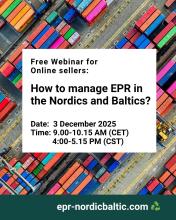
This webinar, tailored for distance sellers, will present the latest EU regulations and provide a comprehensive overview of EPR obligations and guide you through the necessary steps to ensure compliance.
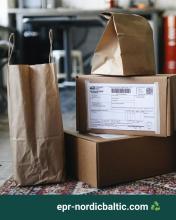
If you sell products online to consumers in the Nordic and Baltic countries, you must fulfill a legal obligation known as Extended Producer Responsibility (EPR). This means you must manage the waste your products create. To help you understand these rules, national EPR authorities have launched a website with more information.
This webinar will explore the international used clothing trade.
It will present the report on From Collection of Used Clothes in Sweden to Reuse in Kenya: A Case Study of Humana LT’s Value Chain for Second-Hand Clothes and look at the economic and environmental value of second-hand clothing exports and how policy can best support circular textile flows.
This #EURegionsWeek 2025 side event will showcase how Europe’s circular value chains can become more inclusive, resilient and sustainable, with a focus on microelectronics, resource recovery and circular economy infrastructure.
It will present the CLOSER and EVEN-CLOSER projects which tackle the recovery of secondary raw materials from e-waste for reuse in the manufacture of chips and microlectronics.
CityLoops (Closing the loop for urban material flows) was a Horizon 2020 project which focused on circular economy solutions for bio-waste and construction and demolition waste (CDW). Seven European cities implemented ten demonstration actions and tested over 30 new tools and processes, which are available together with replication packages and feedback from the cities which tested them.
The COLLECTORS project (waste COLLECTiOn systems assessed and good pRacticeS identified) identified good practices in waste collection and sorting, focusing on paper and packaging, waste electrical and electronic equipment, and construction and demolition.
The ECCA has been set up by the European Composites Industry Association to provide a platform for knowledge sharing and cooperation, driving collective action to establish truly circular, sustainable value chains for composite materials.