TailoredTile creates decorative tile pieces completely made of recovered plastic. The company also promotes circular economy by accepting used tilegrams in exchange of purchase discounts, as this material can be crushed and shaped more than once.
Sonae Arauco is a wood-based panel producer that contributes to the circular economy through the recovery of wood waste. It has developed a close value chain that reuses and recycles the wood residues generated during the production process.
In the Douro Valley of Portugal, the research and development project Da Vide has created a range of products using grapevine residues – from paper to pens – avoiding the use of plastics and wood and using agricultural waste as a resource.
SEAclic is a project developed by the German company Storopack, which has created a packaging technology suitable for temperature-sensitive food products, such as fish. The bio-based version of the Storopack SEAclic Box is made from a new, compostable plastic.
Soeco Kontorsmöbler is a Swedish company that recycles and refurbishes office furniture. Its goal is to take furniture which would most likely be thrown away and transform it into an item that either looks like or is new.
SEA2SEE, based in Catalonia, designs and produces optical frames and sunglasses in Italy, as well as watches in Switzerland, entirely made from recycled marine plastic collected by fishermen in Spain, France and West Africa.
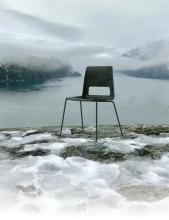
The Norwegian company NCP delivers sustainable furniture from recycled plastic materials through innovation and design. The S-1500 chair, designed by Snøhetta, is produced by NCP showing how plastic waste from Norway’s fish farming can be transformed into a sustainable design object with an expected lifetime of at least 50 years.
The Dutch company KarTent has come up with a sustainable solution for the many tents left behind by music festival goers: a cardboard tent, designed to be purchased and transported in bulk to festival sites. After the festival, the company arranges for the tents to be removed and recycled.
Mamukko is an Irish company, founded in 2011, that uses waste nautical materials as a secondary raw material. They promote upcycling by using end-of-life sails, decommissioned life rafts and recycled leather to make bags.