The CirQuality OWL plus project is funded by the EU (ERDF) and the Federal State North-Rhine Westfalia with the aim of fostering the circular economy in the area of Eastern Westfalen-Lippe (OWL).
Several regional partners from different fields (from energy to technologies to food to universities and associations) have teamed up to use the circular economy to get the region off the ground in an innovative, crisis-proof, resilient and sustainable way. Together, they organise events and strive to meet the following goals:
Qualification of future specialists and managers for the circular economy
Circular Supply Chain Management Solutions (SSCM)
Turnaround to circular thinking and economics in the building sector
Waste and circular economy of the future in the OWL region.
The aim of Poland's Roadmap towards the Transition to the Circular Economy (CE), which was adopted in 2019, is twofold: first, to identify cross-cutting measures capable of having the broadest possible impact in Poland, both socially and economically; and second, to prioritise areas that will enable Poland to take advantage of its current opportunities, and to deal with existing or future challenges.
The Roadmap focusses on 5 areas in particular:
Sustainable industrial production
Sustainable consumption
Bioeconomy
New business models
implementation, monitoring and financing of CE.
The Roadmap includes a set of tools, which are not purely legislative, to create the conditions for a new economic model in Poland.
AIMPLAS, the Plastics Technology Centre, is coordinating a project called C-SERVEES to develop more circular products like washing machines, laser printers and toner cartridges, TV sets and telecom equipment.
Greater circularity and more efficient use of materials present new opportunities for further reducing greenhouse gas emissions.
A new methodology can help to identify which circular economy actions in each sector can make the most promising contributions to meeting targets to reduce emissions and to achieving climate neutrality in Europe.
In the buildings sector, selected circular economy actions can lead to reductions of up to 61 % in the materials-related greenhouse gases emitted across buildings’ life cycles.
In 2019 the European Commission set out a policy guideline to address global environmental challenges and circularity. EURATEXand its members welcome the ambition of the EU Institutions to change the old way and commit to engage with all relevant parties to deliver and implement a new Textile Strategy to boost the circular economy and be fit for the present and future generations.
This strategy by EURATEX is a starting point, with insights into solutions based on a 14-month consultation with members, involving over 100 companies and key stakeholders, focused on applied circular practices and future opportunities. It prioritises removing barriers to a large-scale uptake of circular economy in textiles, sets out 12 key points and puts forward 38 proposals.
Circular Economy Forum Austria is a learning and dialogue platform for businesses, initiating and promoting the exchange and development of knowledge, ideas and initiatives. It identifies potential synergies among companies, politics, science, research and design.
The Forum:
operates and collaborates in a solution-oriented and innovative way;
supports and facilitates comprehensive transformation by linking interdisciplinary know-how and ideas for innovation, decision makers and practitioners;
promotes new business partnerships to increase the visibility of existing and future circular innovation supporting the expansion of Austria's circular ecosystem;
encourages and fosters collaborative projects and initiatives.
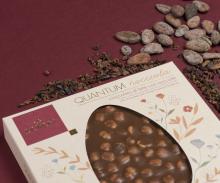
In line with a circular economy strategy, the company Favini and chocolatiers Domori have developped an industrial symbiosis system to produce the ecological paper Crush Cocoa from cocoa processing waste.
Zero Waste Scotland has commissioned a study on Measuring Scotland's progress towards a circular economy, in order to assess the value of existing metrics and identify the most effective ways to drive and track progress on reducing our carbon emissions.
The study has concluded that no single metric could be used to monitor Scotland’s progress on adopting a circular economy. However, a range of metrics could be developed and used collectively.
Two datasets in particular (a Scottish material flows accounts and Scotland’s carbon footprint) will be key to this as the country progresses towards a circular economy.
The Alliance for Flame Retardant Free Furniture welcomes the new Circular Economy Action Plan and calls on EU institutions to address the unnecessary use of chemicals preventing circularity and the achievement of climate goals, such as toxic flame retardants in furniture, which endanger people’s and firefighters’ health as they migrate out of products and can lead to increased fire toxicity.
The use of such retardants is a historical, hazardous and ineffective practice which is not proven to reduce the number of fires. It is at odds with circularity objectives and their presence in furniture runs counter to the ambition to introduce and increase circularity.
Ensuring fire safety is a must, but it needs to be done in ways that are not hazardous.