This case study on the EU's Circular Economy Plan (CEAP) by the Ellen McArthur Foundation reflects back on the steps which the European Commission took to take a lead in circular economy policies globally. From initially aiming at improving resource efficiency, to redefining growth with positive social, environmental, and economic benefits, this case study analyses this policy-making process.
The CEAP was a comprehensive body of legislative and non-legislative actions adopted in 2015, which aimed to transition the European economy from a linear to a circular model. It mapped out 54 actions, as well as four legislative proposals on waste.
By rethinking resource efficiency and material flows, the European Commission has developed a framework to promote systemic change.
Nordic Circular Hotspot is a network and facilitator that accelerates the transition to a sustainable and circular economy in the Nordic region.
It focuses on knowledge sharing, matchmaking and collaboration. It has a roadmap: in 2018, it started up the project, and in 2024 it has reached phase 3: Realisation and implementation in the market. Phase 5, the last one, covers 2028–2030 and will focus on Operation and reaching a circular Nordic market.
Nordic Circular Hotspot functions as the leading resource on the circular economy across the whole of the Nordic region. Its Nordic Circular Arena, Partnership Programme, Nordic Circular Summit and other initiatives are well known and gaining recognition in the Nordic region and beyond.
PC4Change is a project of the Reware Cooperative - Social Enterprise, specialized since 2013 in the refurbishing of computers dismissed by large companies.
The ECESP leadership group on economic incentives is focusing on incentives with a specific potential for increasing the demand for a circular economy, and on policies and challenges such as circular public procurement, Extended Producer Responsibility, tax shift, CO2 pricing, etc.
On average, a European citizen produces half a ton of waste a year. This amounts to 2.5 billion tons yearly for the entire European Union.
The Joint Initiative on Circular Economy (JICE) is a partnership between the EU’s largest national promotional banks and institutions and the European Investment Bank to invest at least €10 billion in the circular economy by 2023.
It provides loans, equity investment, guarantees, innovative financing structures and technical assistance.
The initiative will support projects that prevent and eliminate waste, increase resource efficiency and promote circular business models. Eligible projects can be submitted to the respective JICE partners.
European project BIOnTop obtains promising results in development of new recyclable and compostable packaging. In its first year, BIOnTop has achieved good results in its experimental work on copolymers and compounds with customized biodegradability and multifunctional coating solutions with customized properties.
The Coordination Group decided, in autumn 2019, to create focus groups to hold in-depth discuss and deliver orientations on priority topics.
Textiles are a vast category. The ECESP leadership group on textile focused on the TGLF value chain. Their discussion focused on ways to address essential challenges from a social, environmental and economic perspective.
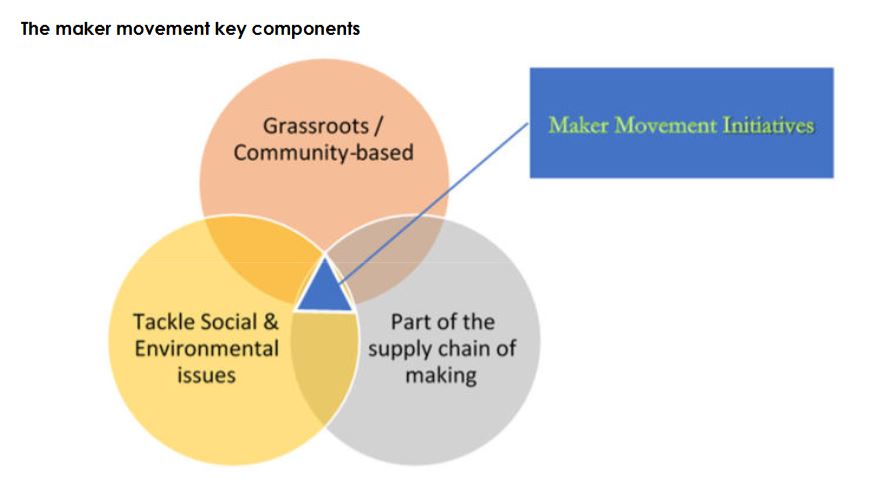
The Pop-Machina project is an EU-funded research project exploring the maker movement contributions to cities’ transition to the circular economy.
This 2nd deliverable 'Mapping the maker community ecosystem and the urban metabolism processes' draws a collection of definitions to characterise the circular maker movement. A set of original tools, including a decision tree, a taxonomy, indicators and maps of the circular maker movement are developed to delineate the circular maker movement, with a focus on the Pop-Machina seven pilot cities.
Eventually, pilot story-boards present the current status of the circular maker movement in the city, with the disclosure of the circular maker passports, characterising the movement in each pilot.