The EU Platform on Food Losses and Food Waste publishes a monthly newsletter to help Platform members stay connected, inform all interested stakeholders about Platform members’ activities and inspire further action in food loss and waste prevention.
Cork-A-Tex is a project that uses recycled cork to create a yarn with high incorporation of cork. Cork is a 100% natural material made from the oak cork trees which can be recycled after its use as cork stopper in wine bottles.
We are launching a Call for Expression of Interest for the new mandate of the European Circular Economy Stakeholder Platform Conference (ECESP), that will run from November 2020 to May 2022, open to stakeholders who wish to take part in this unique European initiative.
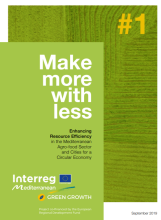
The first of 4 Thematic Working Groups created by the Interreg MED's Green Growth community focused on Sustainable Consumption and Production by enhancing Resource Efficiency in the Mediterranean agrofood sector, as well as in urban areas through the implementation of the Smart City Concept.
The White Paper zooms in on the difficulties that companies face in:
measuring their environmental footprint and resource efficiency;
the use of low-cost, low-tech, labour-intensive and rudimentarily-equipped greenhouses;
the lack of energy efficiency and renovation of EU buildings.
It then presents the projects' solutions and the benefits of resource efficiency for the environment and the economy. The projects were monitored according to the EU CEAP's indicator framework.
A new project addressing the systemic complexities of the Circular Economy is being submitted as a Marie Curie (MSCA) post doc proposal. As these aspects build upon multi-stakeholder knowledge and insights, you are kindly invited to join the project community and collaborate.
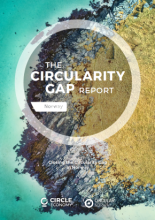
The Circularity Gap Report Norway is an in-depth analysis of how Norway consumes raw materials to fuel its societal needs. Currently, 97.6% of materials consumed each year never make it back into the economy.
Norway also has one of the highest per capita consumption rates in the world (44.3 tonnes per person). At 2.4%, its circularity rate is below the global average (8.6%). Each year Norway consumes 235 million tonnes of materials - metals, fossil fuels, biomass and minerals - to meet its internal needs.
However, the report reveals how Norway could see a 20-fold increase in its circularity by restructuring its businesses and industry through 6 key actions in the following fields:
The EU-funded DigiCirc project aimed to digitalise the circular economy by building on the innovation potential of SMEs in three strategic areas: Circular Cities, Blue Economy, Bioeconomy.
Open calls for each domain were launched to select 45 consortia of SMEs. The consortia took part in one of the three acceleration programmes to transform concepts into robust business models, a process which was completed in 2022. DigiCirc Open Courses disseminate the contents developed for the three acceleration programmes.
A solvent-free adhesive that is suitable for recycling and also for bonding of recycled plastic films has been developed by Henkel to be used for multilayer packaging.