Four-day long celebration of the circular economy in Dublin running from 29 May to 1 June 2023. A unique gathering of international experts, industry leaders and forward-thinking individuals, dedicated to advancing the circular economy agenda.
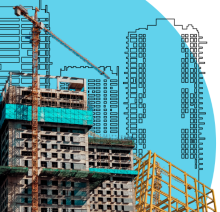
The construction of buildings and infrastructure and the planning of the built environment have a significant influence on the environment and climate. Local initiatives demonstrate the powerful effects of entrepreneurship and proximity in catalysing grassroots change. At the same time, fostering collaboration between local and regional initiatives can help to increase impact and inspire others. How can local initiatives play a role in the global transition to a circular economy?
This event is an accelerator session of the World Circular Economy Forum 2023 and will take place on 1 June at 14:00 - 14:50 EEST (13:00 – 13:50 CEST) at Sokos Hotel Vaakuna, Helsinki, and online.
Local initiatives exemplify the power of entrepreneurship and grassroots action in expediting the shift to closed-loop plastics value chains. How can we leverage the potential of local circular plastics initiatives in driving the worldwide transition to a circular economy? This hybrid event is an accelerator session of the World Circular Economy Forum 2023.
This paper analyses CE policies and discourses in three European cities to draw critical insights and recommendations.
It first reviews the academic literature on urban CE policies to develop a new conceptual framework for analysing CE discourses and policies. This is then used to analyse and compare the CE policies of Glasgow, Amsterdam and Copenhagen.
Results show that technocentric approaches to the CE are dominant in the three cities. Moreover, they have very limited social justice policies for fair distribution of the costs and benefits of a CE transition. Key policy recommendations to address these shortcomings are thus proposed.
The insights offered by this paper are valuable for practitioners and academics seeking to improve urban CE policies.
The collaborative platform Economiecirculaire.org aims to organise knowledge about the circular economy and mobilise actors at regional, national and international level (French regions, Quebec, the Canton of Geneva and the southern Mediterranean).
Created in 2014 by CIRIDD, it is intended for all professionals able to implement, encourage or support projects on this topic (local authorities, companies, developers, consultants, experts, associations, etc.). It comprises 12 regional platforms.
Eclaira is the regional collaborative platform dedicated to the circular economy in the French region Auvergne-Rhône-Alpes. Managed by CIRIDD, it aims to:
Shine a spotlight on initiatives carried out in the region
Encourage collaborative projects in the circular economy
Promote the implementation of the circular economy in the region
The platform enables users to stay abreast of circular trends and events, network, forge partnerships and join projects, use tools and tell other people what they have been doing.
It publishes technical reports and focuses on three areas: water, biodiversity and textiles, tackling each from the perspective of the circular economy. There is also a toolbox.
This WCEF 2023 accelerator session on 1 June is focused on Africa's circular journey and the power of circular economy hubs. Speakers will discuss the unique opportunities and challenges in advancing the circular economy in Africa and review the role of hubs in connecting stakeholders and accelerating the transition to a circular economy.
The panel discussion is covering best practices, public-private partnerships, technology, financing, and capacity-building initiatives to support the growth of circular economy hubs in Africa. The session will end with an outline of future collaboration plans and encourage participants to continue the conversation beyond the session.
This WCEF Accelerator Session on "Growing the Role of Circular Economy Hotspots and Hubs" will showcase successful examples of circular economy hubs from different continents and explore good practices for creating and managing circular economy hubs and strategies for engaging stakeholders. It will also discuss circular diplomacy and identify immediate action items and plans for future collaboration among circular economy hotspots.
Is your country developing and implementing a national circular economy strategy? This is a unique opportunity to get your recipe book ready for creating a national circular economy strategy!
Finland, together with Germany, the Netherlands, the United Nations Environment Programme (UNEP) and the European Environment Agency (EEA), is organising a hybrid Accelerator Session on 1 June in connection with the World Circular Economy Forum (WCEF) in Helsinki.
This year, ACR+ is organising not one but three events:
The ACR+ General Assembly 2023 (31 May) to help shape the direction of the network: organisations and ACR+ members will introduce, discuss and challenge ideas and solutions,
The Circular Economy Hotspot (29 May – 1 June), which will explore three key themes: Policy in Practice, Citizen Engagement and Innovation & Collaboration,
The 14th EWWR Awards Ceremony (1 June), which will assemble the 16 most outstanding initiatives on circular and sustainable textiles from among the 16 000 carried out during the EWWR 2022