RedGirraffe ESG Horizon is a software as a service solution designed for enterprise resource planning. It supports the circular economy by enabling precise tracking and optimisation of Scope 3 emissions across global supply chains.
Maiano Re-Lab comes up with sustainable industrial applications for textile scraps from mass-produced consumer goods. This initiative establishes synergies between industrial sectors, minimising waste and promoting sustainability within the industry.
UNEP’s One Planet Network, the UNDP and the UN Climate Change secretariat have developed a practical toolbox that will help countries identify, prioritise, implement and track circular economy measures with a view to implementing their Nationally Determined Contributions (NDCs) and making them more ambitious.
The NDC Guidance is a practical guide on identifying and prioritising circular measures regarding Nationally Determined Contributions (NDC).
It helps integrate existing approaches, such as the UN Toolbox on Building Circularity into NDCs. 27 activity sheets describe circular activities from a climate reporting perspective, helping with defining, tracking and reporting circular climate impacts.
RE-ZIP is an innovative, circular packaging solution designed to reduce waste in e-commerce. It provides reusable packaging options that replace traditional single-use packaging, helping e-commerce businesses lower their environmental impact.
The Sustainable Fashion Academy launched the Scandinavian Textile Initiative for Climate Action (STICA) in collaboration with various apparel and textile companies. STICA aims to ensure that the Nordic region and Europe reduce their climate impacts in line with the 1.5°C global warming pathway, while transforming their businesses and the industry.
Signatories to STICA undertake to set targets on scopes 1 to 3 and report back. The focus of this report is emissions reduction, and circular business models are presented as part of the solution. The information provided by the signatory companies as part of their reporting covers circular business models, breaking down how these contribute to scope 3 reduction and their place in the companies' climate action transition plans.
Recycling flexible PET packaging is tricky because it is made up of layers but in Spain, recycled polyethylene terephthalate (rPET) is the only type authorised for post-consumer recycled content for food packaging.
The BOTTLE4FLEX project has taken up this challenge and aims to develop 100% recyclable flexible skinpack packaging using rPET.
The ECOFAP project aims to make shoe soles and heels from a material manufactured from tanned leather waste using 3D printing. This research project will help solve the problem of how to recycle leather scraps from the footwear manufacturing industry.
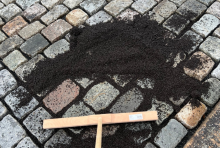
GIND is an innovative company dedicated to developing sustainable and long-lasting solutions for road surfaces and outdoor spaces. Its BIO DILE™ joint filler replaces traditional, resource-intensive and short-lived materials with more environmentally-friendly alternatives made from recycled, sun-dried stone aggregates and bio-based binders derived from cashew nut shells and natural asphalt. At the end of the filler's lifecycle, it can be fully recycled.
Berlin began its circular economy transition in 2020 with the adoption of the Waste Management Concept 2020-2030, aiming to implement measures to reduce household, water and construction waste. To advance this transition, it established the Coordination Office for Circular Economy, Energy Efficiency and Climate Protection in Business in 2022 and the Zero Waste Agency in 2023, and commissioned a study to analyse the circular economy’s potential in the industrial sector.
Despite these efforts, the circular economy in Berlin is still often perceived only in terms of sustainable waste management. This paper looks at challenges holding back progress on the circular economy, including policy coherence, and provides recommendations to accelerate the transition.