The EU Platform on Food Losses and Food Waste was established in 2016, as an informal European Commission expert group bringing together EU institutions, international organisations, experts from Member States and actors in the food value chain.
The Platform helps the Commission identify and prioritise action to be taken at EU level in order to prevent food losses and food waste. In 2019, it adopted a set of key recommendations which are still valid.
In line with the integrated approach needed to tackle food waste without compromising food safety, the Platform recommendations address action required by public and private players at each stage of the food supply chain (including food redistribution).
The Platform has various subgroups, on issues such as action and implementation.
The Luxembourg Wood Cluster was set up in 2016 as a platform for discussion between all players in the wood value chain. One focus is establishing a closed loop for wood. It is managed by Luxinnovation, Luxembourg’s national innovation agency.
The Cluster is intended to be a place to get expert support and connect with key players in the wood processing domain, in order to become more sustainable and competitive through innovation.
It connects users with potential partners in the business and innovation ecosystem. The Cluster regularly organises information and networking events and thematic and technical workshops, and facilitates knowledge transfer and intersectoral R&D. It promotes pilot projects of interest to the wood processing industry and supports cooperation initiatives.
In October 2015 the Luxembourg government named the municipality of Wiltz a Circular Economy Hotspot. In February 2018 Wiltz renewed its political commitment with a Circular Economy Charter signed by its municipal council, by which it undertook to mainstream the circular economy in its future project and activities.
The 2023-2029 political declaration keeps up this momentum.
SuperDrecksKëscht® promotes the creation of an environmentally friendly society that protects its energy and resources, as part of the Luxembourg waste management strategy.
Ecotrel collects and processes waste electrical and electronic equipment (WEEE) across Luxembourg. End-of-life devices are reused or recycled, thereby complying with businesses' CSR requirements and upholding circular economy principles.
The Climate Pact was initially set up by Luxembourg's Ministry of Sustainable Development and Infrastructure. The goal was to enable municipalities wishing to tackle climate change to request State support by signing an engagement charter.
The Climate Pact 2.0 is operated by the Ministry for the Environment, Climate and Biodiversity. It includes measures on greenhouse gas reduction, energy efficiency, renewable energy, air quality, the circular economy and climate change adaptation.
The circular economy is more than a potential model for Luxembourg; it is an economic imperative. Due to its history of exhausting resources then finding substitutes, Luxembourg is already a testing ground for circularity methods. For example its steel, aluminum, glass, and other industries are expert at re-using secondary raw materials. The re-use of those materials is core to their economic survival. It is a competitive necessity to sharpen their capacities in those areas.
Because Luxembourg’s exemplary European society is based on equity, cultural tolerance, economic stability, responsive government and manageable size, the country is a powerful proving ground for circularity.
300 billion cigarette stubs are casually chucked away every year. Given that a single stub can pollute up to 500 litres of water, that is quite the environmental problem.
MéGO! offers a pragmatic solution with a service for collecting, sorting and recycling cigarette stubs.
Luxembourg's new National Waste and Resource Management Plan includes measures and guidelines for the implementation of the amended Waste Management Act of 21 March 2012.
It analyzes the situation regarding waste management and lists measures that will be taken to ensure the re-use, recycling, recovery and disposal of waste in the most environmentally friendly conditions while remaining in line with the national and European legislative context.
The prevention program is integrated in the text of the national plan and introduces a whole-system approach for waste prevention.
The overall objective of the NWRMP is to protect the environment, cultural property and human health by preventing and reducing the harmful effects of waste. In addition, waste management has long-term goals.
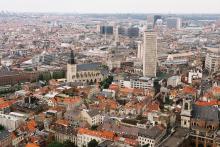
The Brussels Regional Programme for Circular Economy (BRPCE) is an integrated strategy involving 111 measures aimed at delivering circular patterns at the city level. The main objectives of the BPRCE are:
to transform environmental objectives into economic opportunities
to anchor economic activities within Brussels’ borders, maximising resource circularity and boosting entrepreneurship, and