This analysis report was prepared in connection with the EU-funded Wood2Wood project and explores opportunities to advance the circular economy and overcome challenges to waste wood utilisation through supportive policy.
It outlines recommendations and policy options for improving waste wood utilisation through harmonised multi-criteria waste wood classification, refined and extended targets and obligations, enabling policy and policy which fundamentally reflects the lifecycle perspective. These recommendations and policy options serve as a point of departure to help shape the regulatory environment in support of improved waste wood valorisation.
The sustainability certification TCO Certified has been driving social and environmental sustainability in the IT industry for over 30 years. Every third year, the certification criteria are updated to push sustainability where it matters most.
They are organising an event where they will discuss the steps needed to drive sustainability in four key areas (climate, substances, circularity and supply chain) and present their new Roadmap for Sustainable IT.
On 12 November, the European portal for energy efficiency and renewable energy in buildings BUILD UP is hosting the sixth and last webinar, part of a series of six webinars organised with the COST Action project on ‘Stakeholder Webinar Series – Deconstruction and Demolition Teams & Waste Management Industry’.
incommon is a non-profit organisation that encourages people to adopt the circular economy as a way of life. They use a bottom-up approach, working with individuals, schools, businesses, institutions, groups and local authorities.
Their approach ensures that people are informed about circular economy principles and engaged in implementing them, enabling them to make sustainable choices and drive local change.
The European Commission is opening a call for membership applications for a new Ecodesign Forum under the Ecodesign for Sustainable Products Regulation. The forum will play an important role in the implementation of the ESPR by involving all stakeholders in developing rules for more circular, energy-efficient and sustainable products.
The European Commission's Joint Research Centre is organising a second consultation meeting with stakeholders as part of its ongoing work on a preparatory study on textile products. This will support the implementation of the recently adopted Ecodesign for Sustainable Products Regulation.
Renewaball introduced the world’s first fully circular tennis and padel balls, designed with recycled materials sourced from used balls collected across European clubs.
This project embodies eco-friendly design by reusing rubber from old balls and using biodegradable wool felt to replace conventional polyester and nylon, which reduces microplastic pollution.
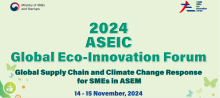
The ASEM SMEs Eco-Innovation Center will be hosting a Global Eco-Innovation Forum under the heading Global Supply Chains and Climate Change Response for SMEs in ASEM.
The forum is a unique opportunity to explore the latest strategies enabling SMEs to respond to climate change and adapt to global supply chain regulations. It will provide insights into supply chain regulations and climate change responses for SMEs and startups.