Banca Regională Pentru Alimente Cluj (Cluj Regional Food Bank) collects food donated by producers, importers, distributors and retailers and redistributes it to NGOs in the counties of Cluj, Alba, Sibiu and Bistrița-Năsăud. Reducing waste and delivering positive social impact!
When designing the varioPrint 135, Océ (which changed its name to Canon Production Printing in 2019) partnered with the Netherlands Enterprise Agency and Philips to experiment with the use of recycled plastic in the production of industrial printers. The company has made a further step towards circular economy and succeeded in developing an internal component that contains at least 30% post-consumer recycled polycarbonate.
Orange Fiber has closed the loop on orange waste by patenting a technique to turn the cellulose fibre in citrus waste into a fabric which is suitable for the fashion industry.
Study on Identifying the Impact of the Circular Economy on the FMCG industry: Opportunities and Challenges for Labour Market, Supply Chains and Consumer Behaviour
Tarkett is a global leader in innovative flooring and sports surface solutions. It operates a take-back Restart® programme to collect flooring, which is then sorted and selected as a source of raw materials for use in its production process.
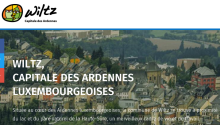
In October 2015 the Luxembourg government named the municipality of Wiltz a Circular Economy Hotspot. In February 2018 Wiltz renewed its political commitment with a Circular Economy Charter signed by its municipal council, by which it undertook to mainstream the circular economy in its future project and activities.
The 2023-2029 political declaration keeps up this momentum.
SuperDrecksKëscht® promotes the creation of an environmentally friendly society that protects its energy and resources, as part of the Luxembourg waste management strategy.
The Climate Pact was initially set up by Luxembourg's Ministry of Sustainable Development and Infrastructure. The goal was to enable municipalities wishing to tackle climate change to request State support by signing an engagement charter.
The Climate Pact 2.0 is operated by the Ministry for the Environment, Climate and Biodiversity. It includes measures on greenhouse gas reduction, energy efficiency, renewable energy, air quality, the circular economy and climate change adaptation.