ENEA, the Italian National Agency for New Technologies, Energy and Sustainable Economic Development, isdirectly involved in activities focused on the assessment, proposal and selection of circular economy indicators.
The Circular Economy Action Group, the business initiative promoted by Forética in Spain to lead the transition of companies towards a circular economy model, has produced a report entitled "The reality of plastics: myths and truths" [La realidad de los plásticos: Mitos y verdades].
The aim of the report is to ensure a better understanding of plastic waste pollution, thus promoting the foundations of the new plastics economy. It also outlines the actions to be taken in order to improve plastic circularity.
Forética's mission is to promote the integration of social, environmental and good governance aspects in the strategy and management of companies and organisations with one objective: to achieve a sustainable future.
Holland Circular Hotspot is a private-public platform in which companies, knowledge institutes and local authorities collaborate to promote and support international collaboration and knowledge exchange on Dutch circular economy, and the Netherlands Enterprise Agency, a government agency for sustainable, agricultural, innovative and international business development and growth, have come together to share insights, networks and resources to help kickstart circular developments that will boost the Sustainable Development Goals (SDGs).
Circular examples from various market segments closely linked to SDGs such as agri-food, manufacturing and the built environment are included in the brochure next to cross-sectoral topics such as consumer goods or plastics.
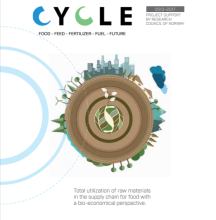
The CYCLE 2013-2017 interdisciplinary project, supported by the Research Council of Norway, focused on the food supply chain from both agriculture and marine sectors, with the aim to improve utilisation of raw materials in a bio-economical perspective.
AIMPLAS - a consortium member of the OCEANETS project - has developed a material that ensures the traceability of fabric made from end-of-life fishing nets. When exposed to infrared radiation, the material changes colour and so helps identify where it came from.
This research note produced by Ecopreneur.eu is a 1st inventory of the potential impacts of future EU circular fashion on non-European textile producing countries. It uses existing literature and input from four circular economy experts to analyse the economic, social and environmental impacts.
Textiles and clothing play an important role in our everyday life. But the global fashion industry model is unsustainable. It uses large amounts of resources and has negative impacts on the environment and people. The global fashion industry, therefore, has to make a transition towards a circular model. In a ‘circular’ fashion economy, clothes, textiles, and fibres are kept at their highest value during use and re-enter the economy to avoid becoming waste.
This research note produced by Ecopreneur.eu is a first inventory of the potential impacts of future EU circular fashion on non-European textile producing countries. It uses existing literature and input from four circular economy experts to analyse the economic, social and environmental impacts.
The Finnish Innovation Fund Sitra is collecting a selection of circular economy solutions that are among the most viable, promising, scalable and impactful in the world.