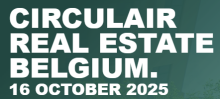
This conference offers a space for knowledge transfer and strategic exchange on circular economy in the field of public procurement. At the same time, it provides insights into European best practices and promotes dialogue on innovative approaches and synergies for successful implementation.
Approximately 400 million tonnes of plastic are produced globally each year.
If tender documents require recycled materials, encourage reuse or repurposing of plastic-containing products, and prevent the use of single-use plastics, then public procurement can play a pivotal role in curbing the plastic crisis.
This webinar will present examples of how contracting authorities can limit plastic waste and pollution through procurement decisions.
Ireland's Environmental Protection Agency hosts an annual Circular Economy Conference to discuss priority topics and highlight the opportunities and challenges in transitioning to a circular economy in Ireland.
This year's event will focus on topical areas, such as the forthcoming EU Circular Economy Act, making circular models more competitive and extended producer responsibility in priority sectors. Through ‘Local Circular Solutions’ presentations, enterprises will showcase their circular business models.
Naturalmat is an SME that makes organic, natural mattresses, toppers and bedding, using materials that are biodegradable or recyclable.
They have initiated a number of circular projects, such as their Mattress for Life InitiativeTM which gives owners the option to have their old mattress refurbished, recycled or donated if it's still usable.
This is a yearly event tackling the regional energy transition, with an emphasis on debate and networking. This year's meeting will take place in the Mauges community and will focus on circular economy issues and cooperation with economic actors.
Denuo is the Belgian federation of recycling and waste management businesses. It aims to help shape the future of used materials and build a sustainable and circular economy.
It represents over 250 companies active in the collection, sorting, processing and recycling of used materials, land and wastewater and is aiming to increase this number. These companies are pivotal in ensuring that materials are reused and not lost.
Denuo also provides expertise to help other companies become more circular.
The Cross-border Circular Economy Forum is a two-yearly event bringing together project organisers, startups, companies, and public and professional stakeholders in the French and Swiss circular economy. Come and see how the circular economy can make your business more competitive!
UtilDeco Group SRL has become Romania’s flagship work-integration social enterprise.
In 2023, it linked its textiles and coffee operations in a circular-economy pilot scheme: fabric off-cuts from uniform production and empty jute coffee sacks were upcycled into OPYA Fashion, a limited-edition collection of jackets, totes and accessories.
The enterprise is now scaling circularity through two major projects, one on digital product passports in textile products and the other on hiring workwear.
The annual Circular Economy Insights Series helps shape strategies and informs the development of support for communities of practice across Ireland. It highlights research gaps and will guide work in this area.
The 2025 report is designed to support an evidenced-based approach to public engagement and communications for a circular economy. It integrates best practices, targeted market research, socio-demographic analyses and community initiatives to provide key insights and statistical evidence on the specific trends currently driving circular economy behaviour in Ireland.
It aims to strengthen capacity for high-quality communications and public engagement to ensure that Ireland is informed and enabled to participate in, and benefit from, the circular transition.
Germany's National Circular Economy Strategy adopts a strategic vision focused on reducing the consumption of primary raw materials. This approach is guided by the proposal from the International Resource Panel, under the United Nations Environment Programme (UNEP), which sets a global target of 6-8 tonnes of raw material consumption per capita per year by 2050.
The strategy considers every stage of the cycle: product design, material selection, production, maximising the use phase and, finally, reuse and recycling. It aims to prevent waste from being created in the first place. This can be achieved through smart product design, efficient manufacturing, extended product lifespans, easier repairability and maximising the recycling of all materials.