The circular economy is attracting significant interest worldwide, as evidenced by the numerous government strategies, business commitments and partnerships devoted to its development. At the EU level, the Action Plan for the Circular Economy and several other policy documents have demonstrated a strong commitment to move towards a low-carbon and circular economy. While the calls for a new economic model grow louder, it is clear that the transformation of markets and industries on a large scale will not be an easy achievement. It will require well-designed and ambitious policies to foster the transition as well as new business models. Against this background, CEPS brought together executives from major multinational companies as well as representatives of business associations and others.
Volpy was an all-in-one ethical and environmental innovation on the smartphone market: customers could have their smartphones valued, return them and exchange with others directly through an app.
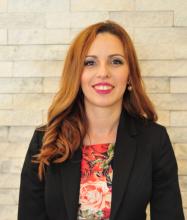
Simina Lakatos has been founding president of the Ernest Lupan Institute for Circular Economy and Environment (IRCEM) since 2012. She has economic and technical knowledge, abilities and experience: she holds a B.A. in Economics and a B.A. Honours in Materials and Environment Engineering. She obtained a Doctorate in Engineering and Management in 2011 after defending her thesis on Corporate Social Responsibility.
Simina has been part of the Department of Management and Engineering Economics of UTC since 2011, where she teaches and researches the following areas: sustainable development with a focus on the circular economy, strategic management with a focus on the social economy, enterprise assessment and marketing and international management, all of which helps her to develop IRCEM. Her focus is on accelerating the transition towards circularity from the bottom up with concerted actions, developing practical and scalable solutions, organising local/regional/EU campaigns, and communicating and involving others in the dissemination of information on the circular economy and messages on sustainable development. Simina is Romanian and speaks fluent English and Italian.
Since 2011, Closing the Loop has been operating a successful waste compensation model. It has developed a unique approach in which customers pay to compensate for the marketing of new electronic devices. The fee is used to collect scrap mobile phones and batteries via Closing the Loop's long-term networks in Africa for responsible recycling in Europe.
The Solidarity Computers initiative aims to extend the useful life of IT equipment that no longer meets the requirements for use. This can be reused by employees for their personal use by buying it for a symbolic fee, or donated to NGOs or to other external entities.
Laura Cutaia, researcher at ENEA, is an Environmental Engineer (1996) with a PhD in raw materials engineering (2002). Her main research topics are:
Industrial ecology and symbiosis,
Technology for raw and secondary materials treatment,
Resources management,
Life Cycle Assessment,
Environmental certification,
End of life management.
Laura Cutaia is responsible for making the most of resources at ENEA , where she is working on the circular economy and resource efficiency, industrial ecology and symbiosis, LCA, environmental certification schemes, the REACH regulation and sustainable industrial areas (more information).
Laura Cutaia is also president of SUN - Symbiosis Users Network (Italian network for industrial symbiosis) and president of UNI CT 057 on the circular economy that works with ISO TC 323 on the circular economy. UNI is the Italian body responsible for standardisation.