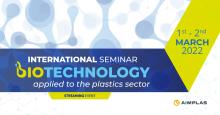
AIMPLAS organises its 1st International Seminar on Biotechnology Applied to the Plastics Sector on 1-2 March 2022, to discuss the main RDI developments and global solutions for the entire value chain. It tackles the use of organic waste to obtain new plastics, enzymatic recycling processes for plastics, the role of biotechnology in recovering complex waste, converting plastic industry scrap, etc.
Horizon Europe Framework Programme has published a call on circular economy and bioeconomy sectors. The deadline for submissions is 15 February 2022.
The successful proposal will support the European Green Deal with a topic that will support the transition towards a sustainable, regenerative, inclusive and just circular economy across regions of Europe at local and regional scale.
The European Commission is sounding out citizens, consumers and expert stakeholders with a view to the preparation of an EU-wide policy framework for biobased, biodegradable and compostable plastics.
The consultation is open for feedback until 15 March 2022.
The initiative called Microplastics pollution – measures to reduce its impact on the environment aims to tackle microplastics unintentionally released into the environment. It will focus on labelling, standardisation, certification and regulatory measures for the main sources of these plastics.
The European Commission would like to hear your views on microplastics pollution. Give your feedback!
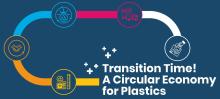
In its publication "Transition time! A circular economy for plastics", the Dutch Sustainable Growth Coalition sheds light on the challenges of plastic, shares innovative cases and makes specific recommendations on how to incentivise action.
The roadmap Policy Framework on biobased, biodegradable and compostable plastics has been published on the European Commission’s portal. You are welcome to give your feedback on it until 27 October!
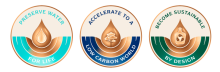
Reduce water use in Diageo's operations with a 40% improvement in water use efficiency in water stressed areas and 30% improvement across the company.
Other (Sustainable management of water)
To be achieved by:
Replenish more water than Diageo uses for their operations for all their sites in water-stressed areas by 2026.
Other (Sustainable management of water)
To be achieved by:
Invest in 150 projects to improve access to clean water, sanitation, and hygiene (WASH) in communities near Diageo sites and local sourcing areas in all of Diageo's water-stressed markets.
Other (Sustainable management of water)
Start Date:
Engage in collective action in all of their Priority Water Basins to improve water accessibility, availability and quality and contribute to a net positive water impact.
Recycling (also including specific waste streams)
To be achieved by:
Achieve zero waste in Diageo's direct operations and zero waste to landfill in Diageo's supply chain.
Recycled materials as part of raw materials demand (recycled content)
To be achieved by:
Ensure 100% of Diageo's packaging is widely recyclable (or reusable/compostable).
Recycled materials as part of raw materials demand (recycled content)
To be achieved by:
Continue to reduce packaging and increase recycled content in Diageo's packaging (delivering a 10% reduction in packaging weight + increasing the % recycled content of the packaging to 60%).
Recycled materials as part of raw materials demand (recycled content)
To be achieved by:
Ensure 100% of Diageo's plastics are designed to be widely recyclable (or reusable/compostable) by 2025 and achieve 40% recycled content in Diageo's plastic bottles by 2025, and 100% by 2030.
Other (Sustainable agriculture management)
To be achieved by:
Provide all of Diageo's local sourcing communities with agricultural skills and resources, building economic and environmental resilience (supporting 150,000 smallholder farmers).
Other (Sustainable agriculture management)
To be achieved by:
Develop regenerative agriculture pilot programmes in 5 key sourcing landscapes.
Other (Accelerate to a low carbon world)
To be achieved by:
Become Net Zero carbon in Diageo's direct operations.
Other (Accelerate to a low carbon world)
To be achieved by:
Reduce Diageo's value chain carbon emissions by 50%.
Other (Accelerate to a low carbon world)
To be achieved by:
Use 100% renewable electricity across all of Diageo's direct operations.
The NETWAP project has produced a set of guidelines for national and local governments to manage biowaste and optimise marine litter prevention on beaches, with an emphasis on the local/community dimension.
Pryme converts plastic waste into valuable products on an industrial scale. It has developed a new approach to an existing and proven chemical recycling technology. Pryme has optimised the pyrolysis process by adding proprietary characteristics.