How to stop plastics ending up in the ocean? The Rethinking Plastics – Circular Economy Solutions to Marine Litter project is working on solutions together with seven countries in East and South East Asia.
The study sheds light on the background of the prevention of plastic waste from packaging and disposable products by explaining the need for action, the environmental impacts and risks to human health.
Experiences of the members of the PREVENT Waste Alliance and their partners in the prevention of plastic waste by multi-actor partnerships are presented by means of 17 best practice examples.
Finally, the study gives recommendations for the reduction of plastic waste and the further work of the PREVENT Waste Alliance. These include success factors for waste prevention, necessary next steps and conclusions regarding the necessary political framework conditions.
PREVENT Waste Alliance is an international think tank, connecting circular economy practitioners worldwide.
It was launched in May 2019 and serves as a platform for exchange and international cooperation. Organisations from the private sector, academia, civil society and public institutions work together for a circular economy.
Its goal is tominimise waste, eliminate pollutants and maximise the reuse of resources in the economy. It promotes waste prevention, collection and recycling as well as increased uptake of secondary resources.
The members take part in working groups on plastics, e-waste and batteries, and organic waste. The Alliance has also produced a toolbox on Extended Producer Responsibility for packaging.
The Life-REPOLYUSE project was about REcovery of POLYurethane for reUSE in eco-efficient materials. It tried to solve the environmental challenge of the scarcity of resources and waste management in order to mitigate the effects of climate change. It addressed the problem of polyurethane plastic waste using innovative techniques.
The Großes Walsertal region has developed a Circular Economy Strategy: it has set itself the objective of introducing circularity at every stage of the value chain, from production to consumption, repair and waste management. Smart product design and increased recycling and reuse activities will contribute to gradually close the loop of each product life-cycle in the region.
The Großes Walsertal communities act as role models by sharing tools, offering vouchers for local food stores (as part of the leisure activities funding) and implementing binding green criteria for events organised on their territory.
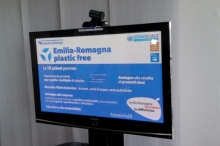
PlasticFreER is the Plan approved by the Emilia Romagna region (IT) Executive in 2019 for a shared strategy with public bodies, businesses, trade unions, associations and the scientific community to free offices, canteens, festivals and parties from disposable plastic and clean up public spaces, rivers, sea and beaches.
A common path in 15 actions for an increasingly circular and sustainable economy.
Reconvert, reduce and clean up: three pillars of the rule approved by the regional government which translate into support, with funds and incentives, for the conversion of companies producing plastic - particularly single-use.
Aid to public bodies and private individuals who decide to reduce their use and a special cleaning project to remove waste from the beds of waterways/sea.
The Circular Plastics Alliance aims to boost the EU market for recycled plastics to 10 million tonnes by 2025. The alliance covers the full plastics value chains and includes over 175 organisations representing industry, academia and public authorities. New stakeholders can join the alliance by signing its declaration.
PU foam pressurised containers are used to fill gaps and to insulate and install window and door frames so as to make buildings airtight. OCF (one-component foam) producers have invested in a recycling company which recycles the metals in the packaging material, the reactive residual polyurethane prepolymer and the propellant.
The Circular Plastics Alliance aims to boost the EU market for recycled plastics.
It covers the full plastics value chains and includes over 330 organisations representing industry, academia and public authorities. It is open to all public and private actors from European plastics value chains that are ready to contribute to delivering on the alliance's declaration, specifically that by 2025 at least 10 million tonnes of recycled plastics should find their way into products and packaging in Europe each year.
Companies and business associations are encouraged to submit voluntary pledges on recycled polymer(s) to be produced or used by their organisation by 2025.