The fashion sector is awash with certification schemes, sustainability labels and multi-stakeholder initiatives all seeking to steer the industry onto a greener course. Such schemes serve a dual purpose for the brands. As the fashion industry is one of the least regulated sectors in the world, they partially exist as a genuine attempt to move towards sustainability but they also enable ‘greenwashing’.
This report has sought to assess whether certification schemes, labels and multi-stakeholder initiatives are fit for purpose and what role they play in addressing the damage done by the fashion industry. The findings show that the majority of schemes offer a false promise of certification for textiles and a highly sophisticated form of greenwashing.
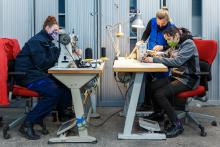
remesh is a socio-professional business workshop with an environmental impact. Most of its employees are women from disadvantaged background. The workshop is also providing a circular economy business model as they reuse advertising banners and meshes to make new products that are fashionable but sustainable.
While digital networking is of great advantage for everyday life, the incredible amounts of electrical devices bring with it some particularly ecological risks, especially with regard to the use of resources. This is why the European Commission in the New Circular Economy Action Plan announced a Circular Electronics Initiative. There are still many challenges to be discussed during this workshop.
In 2021, the Leadership Group on Retailers, Consumers and Skills considered issues such as how to made the electronics sector more circular, how to boost public awareness of the need to become more circular and how to step up training with a view to reskilling and upskilling.
Yuman Village is a temple of the circular economy located in Brussels. It offers a unique 'one stop shopping' experience that encourages the emergence of new circular economy models, creates local jobs and reduces the number of trips needed to buy sustainable and local products.
Schijvens has been producing corporate uniforms for more than 150 years now. In 2017, they began collecting customers' old clothing, shredding it and mixing the textile fibres with shredded PET-polyester ones from sportswear, fishing nets and bottles. This led to 100% recycled yarn, which is used to make new fabrics and ultimately new uniforms.
Splosh sells its range of products – from detergents and fabric softeners to shower gel and hand wash – in bottles that can be refilled from their concentrated refill pouches. Buying refills in these pouches cuts plastic waste by 95%.
CONTINUED is a circular e-commerce platform for fashion.
It was launched in 2017 with the aim of creating a generic software solution for circular consumption in the fashion industry. Recirculating clothes is up to 3000% more efficient than reusing material in reducing the fashion industry's environmental footprint.
The platform connects up brands and consumers. It offers dashboard tools for Sales, Inventory, Finance and Impact, as well as a Webshop back-end supporting several rent/resale models, account management and payment.
CONTINUED is fashion as a service and sustainability as a product. It lets brands explore future business opportunities based on the circular economy while carrying out existing business activities.
GoodAfter.com is an online supermarket focused on products near their recommended consumption date or, in certain cases, even after their "best-before" date.