Biogas Thrace S.A. is setting up three biogas plants which will be supplied with agricultural and industrial organic waste by a network of local farmers working on long-term contracts. The farmers will receive fertiliser and reduce their waste disposal costs, and the plants will each generate 24GWh/y.
Getliņi EKO manages the largest solid municipal waste landfill in the Baltic states.
The modern waste management centre processes household, biological, production and construction waste from the Central Latvia waste management region. The company produces electricity and heat from the gases produced by both biodegradable and non-biodegradable waste.
B-Plas treats sludge from municipal wastewater plants, industrial facilities, agro-food industries and paper mills.
By developing and installing on-site plants, sludge is converted into raw material for biopolymers and the residual volume needing disposal is reduced by up to 80%.
APARO is building an operational software infrastructure for textile circularity.
It is starting with the physical processes where circularity actually happens: collection, sorting, material movements, quality assessment, traceability and downstream flows.
Servicios Medioambientales de Valencia processes used mattresses into fractions for reuse. Their scalable model produces bales of polyurethane foam and steel which can be used as secondary raw materials.
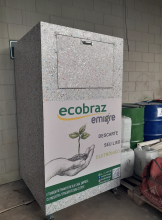
Through this programme, companies can sponsor the local collection and proper sorting of e-waste. This enables EU-based companies operating in Brazil to meet their sustainability obligations.
The EU-funded RECLAIM project aimed to develop low-cost, portable, easy to install and highly productive 'portable robotic Material Recovery Facilities' (prMRF), which will enable full material recovery anywhere, even in the most remote areas.
As its first real-world test, the project deployed the world's first AI-powered portable recycling plant in the island of Kefalonia in Greece, bringing on-site waste sorting to European islands and remote destinations.
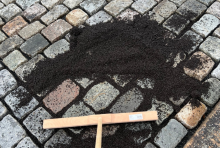
GIND is an innovative company dedicated to developing sustainable and long-lasting solutions for road surfaces and outdoor spaces. Its BIO DILE™ joint filler replaces traditional, resource-intensive and short-lived materials with more environmentally-friendly alternatives made from recycled, sun-dried stone aggregates and bio-based binders derived from cashew nut shells and natural asphalt. At the end of the filler's lifecycle, it can be fully recycled.
Purman Recycling and Processing Ltd. has developed the purman® method, a mechanical recycling process for rigid polyurethane (PU) and polyisocyanurate (PIR) foams.