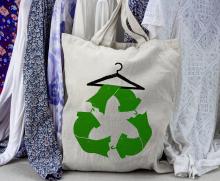
LENA is the first online and offline fashion library in the Netherlands. It has a system for borrowing clothes and provides an extended wardrobe for every occasion. Their aim is to speed up the fashion industry's transition towards a circular system.
Back in 1931, EMMA was founded as a social enterprise for injured workers from the Dutch State Mines. Hence, social entrepreneurship is in the DNA of EMMA Safety Footwear. Today, EMMA still employs about 100 people who need some additional support in the labour market. Making sustainable safety shoes was, therefore, a logical next step in EMMA’s journey towards a positive footprint.
You are encouraged to participate in a survey that the European Food Safety Agencyis launching to complement and prioritise the set of circular economy areas and practices which might pose risks to food/feed safety and the environment.
On 31 May, it was announced that the European Commission issued guidance on the EU rules on single-use plastics and adopted an Implementing Decision on the monitoring and reporting of fishing gear. These rules aim to reduce marine litter from single-use plastic products and fishing gear and promote the transition to a circular economy.
Grover rents technological items such as smartphones, laptops, virtual reality (VR) gear and wearables to customers on a flexible basis and with full usage rights. Customers can choose how long they want to rent a given product.
The European Commission is organising a series of targeted stakeholder workshops to gather input on challenges and gaps as well as opportunities for the sector towards sustainability.
The third workshop (15 June 2021) focuses on sustainable consumption and circular business models in the textile sector.
Leef has eliminated plastic waste by producing 100% biodegradable plates from (non-palm oil) palm leaves grown in mixed plantations in Tamil Nadu, India.
MIWA designs and produces genuinely circular packaging for the whole supply chain. It supplies brand owners/producers with smart capsules and retailers with smart dispensers using the service as a product model.
Ligeti Bolt is a packaging-free grocery shopin Budapest. The shop does not sell any products in plastic wrapping or packaging and so customers buy exactly the amount they need.