This document is the result of the active involvement of the Interreg MED Green Growth community, together with its projects.
To make circular economy (CE) simpler, more efficient and more competitive, it is suggested to take a holistic, integrated and cooperative approach, by considering all phases in which CE is structured, all levels (from local to European) and all stakeholders involved in the implementation of CE models.
The policy recommendations proposed in the document are structured into six main areas:
Investments and access to finance
Technological infrastructure
Labour market and employment
Awareness and knowledge
Cooperation among stakeholders and technology transfer
The Capital Region of Denmark is committed to becoming a fossil-free and circular region by 2050. Inter alia, this entails achieving an 80% recycling rate for the region’s waste by 2035, and growing green business activities by 8% by 2025. New forms of cooperation and dialogues between stakeholders are necessary to reach these goals.
Through a three-year public-private partnership, the Region and its partners aim to pave the way for greater collaboration between the waste sector and the business community. Metabolic collaborated with the Region to undertake a material flow analysis and an environmental assessment of the Region’s waste system, and to identify impact hotspots and circular opportunities.
The Circularity Gap Report Norway is an in-depth analysis of how Norway consumes raw materials to fuel its societal needs. Currently, 97.6% of materials consumed each year never make it back into the economy.
Norway also has one of the highest per capita consumption rates in the world (44.3 tonnes per person). At 2.4%, its circularity rate is below the global average (8.6%). Each year Norway consumes 235 million tonnes of materials - metals, fossil fuels, biomass and minerals - to meet its internal needs.
However, the report reveals how Norway could see a 20-fold increase in its circularity by restructuring its businesses and industry through 6 key actions in the following fields:
The relationship between innovating business model and the circular economy is complex and rapidly evolving. So, how can we turn the focus on the circular economy into a driver for global sustainability?
The report titled "Incremental Circular Economy as a Serious Sustainability Problem" aims to understand the relationship between business model innovation and the circular economy.
It also seeks to guide companies, intrapreneurs in companies, and organisations working towards a circular economy. And, finally, it aims to provide a structure to understand very different approaches and their outcomes.
On average, a European citizen produces half a ton of waste a year. This amounts to 2.5 billion tons yearly for the entire European Union.
The Joint Initiative on Circular Economy (JICE) is a partnership between the EU’s largest national promotional banks and institutions and the European Investment Bank to invest at least €10 billion in the circular economy by 2023.
It provides loans, equity investment, guarantees, innovative financing structures and technical assistance.
The initiative will support projects that prevent and eliminate waste, increase resource efficiency and promote circular business models. Eligible projects can be submitted to the respective JICE partners.
This report analyses the scope of the plastic industry for the economy, the planet and society, as well as the policies at European and Spanish context to move towards a new plastic economy. Besides, the trade offs for companies are identified as key challenges.
Finally, the report shows the best practices of eleven companies from different sectors.
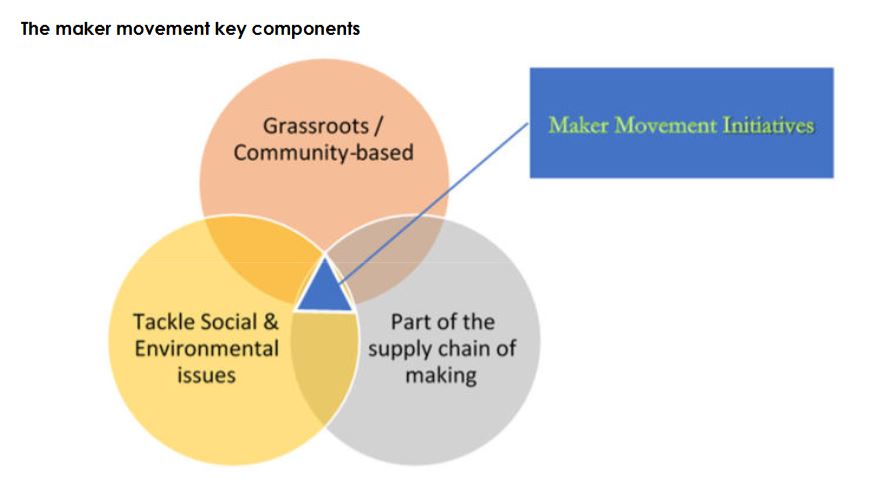
The Pop-Machina project is an EU-funded research project exploring the maker movement contributions to cities’ transition to the circular economy.
This 2nd deliverable 'Mapping the maker community ecosystem and the urban metabolism processes' draws a collection of definitions to characterise the circular maker movement. A set of original tools, including a decision tree, a taxonomy, indicators and maps of the circular maker movement are developed to delineate the circular maker movement, with a focus on the Pop-Machina seven pilot cities.
Eventually, pilot story-boards present the current status of the circular maker movement in the city, with the disclosure of the circular maker passports, characterising the movement in each pilot.
Zero Waste Scotland has commissioned a study on Measuring Scotland's progress towards a circular economy, in order to assess the value of existing metrics and identify the most effective ways to drive and track progress on reducing our carbon emissions.
The study has concluded that no single metric could be used to monitor Scotland’s progress on adopting a circular economy. However, a range of metrics could be developed and used collectively.
Two datasets in particular (a Scottish material flows accounts and Scotland’s carbon footprint) will be key to this as the country progresses towards a circular economy.
In 2016, the Italian National Agency for New Technologies, Energy and Sustainable Economic Development (ENEA) set up a Symbiosis Users Network (SUN) to boost industrial symbiosis in Italy. The network promotes circular economy models through industrial symbiosis by focusing on operational issues.
SUN's 2019 conference was devoted to Good practices of industrial symbiosis in Italy and the contribution of regional policies as a strategic lever. The event, co-organised by SUN, Ecomondo and ENEA was held in Rimini (IT) on 7 November 2019 at Ecomondo - a leading event in Europe for new circular economy models.
Reports on ENEA-promoted conferences on industrial symbiosis are available here.