Sopköket is a Swedish restaurant and catering company founded in 20215. It prepares meals which partly incorporate rescued and surplus food from supermarkets and other companies. Their goal is to reduce food waste.
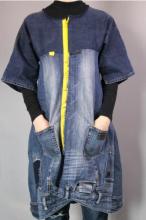
ZĪLE is a Latvian fashion brand which develops its clothing while looking at a sustainable future, through the concept of upcycling. The label’s main resource materials are denim trousers, men’s shirts and imagination.
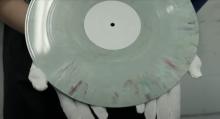
Music business can be circular, too! WMfono makes vinyl records from the waste that remains after cutting other records. Kayax label then packs the discs in recycled paper and employs a protection film made from maize.
The Finnish region of Päijät-Häme is a strong promoter of circular economy practices. In line with the national strategy, the region focuses on regional-level initiatives. It therefore seeks to engage various regional stakeholders and foster a common vision and strategy.
The formation of a stakeholder group through a series of networking events has led to a constantly evolving roadmap. Several projects are currently being implemented on the basis of this roadmap, and many good practices have been achieved which serve as an example of a circular economy in the region.
Zona Urbana is a fashion company based in Sofia, Bulgaria. Since 2004, it designs and manufactures products with recycled materials, mainly bags or wallets.
In Venturis HoReCa a group of professionals has joined forces, knowledge, expertise and ideas to tackle the problem of food waste. They have developed an IT system (KuMin.Gastro) to monitor and reduce food waste in kitchens and canteens. Monitoring of food waste is the first important step in the process of reduction. Venturis HoReCa also advises companies on how to limit food waste.
This working paper, prepared by the ILO, looks at the future of work in textiles, clothing, leather and footwear (TCLF) industries.
It explores how technological advances, climate change, globalisation and changing demographics will shape these industries. It then analyses how these challenges and opportunities will impact decent work, and looks at the future of TCLF production in three categories of countries (least developed, middle income and high income). It concludes that at the present rate, the TCLF industries will not move to a circular economy approach for years.
Repairmystuff is an online platform based in Ireland which supports, promotes and encourages the repair industry in Ireland.
It promotes a circular economy by providing a free online space for repair companies. It aims to give consumers more options for accessing repair services throughout the country. It also provides consumers with a search tool which suggests service providers according to what needs to be repaired and where in the country the person is located.
REC.ON creates its production by recovering auto parts. Using a unique upcycling process, they transform used, unwanted parts of automobiles into new, high-quality, functional pieces of design, adding style and an industrial aesthetic to any interior. Moreover, they have a unique process of acquiring their materials.