134 people died in the devastating flooding in the German region of Ahrweiler in July 2021, caused by a climate change-induced weather situation. Over 400 000 tonnes of waste were created by the floods in one night. 40 000 households were hit, and massive damage to infrastructure such as roads, schools and hospitals was reported. The situation was described as being similar to the massive destruction following a war.
Thinking Circular’s report summarises the process of waste management and learning from this regional crisis.
Within the framework of the Circular Economy Initiative Deutschland (CEID) and its three interdisciplinary and cross-sectoral working groups, more than 130 experts from industry, science and civil society have summed up their findings in the Circular Economy (CE) Roadmap for Germany, which consists of a consolidated opinion addressing society as a whole.
This Roadmap, which has focused - right from the beginning - on shaping a consistent and common target vision for a circular economy in 2030, is a scientifically-based framework for action that systemically describes the necessary steps for Germany to transition to a CE and provides decision-makers from politics, industry and science with concrete recommendations for action.
The BDI Initiative Circular Economy was created in April 2021 by the Federation of German Industries.
It is a network of more than 50 members that defines the potential of the circular economy and the necessary framework conditions through practical discussions. To this end, they are in close dialogue with policymakers in Berlin and Brussels and with the scientific community.
The Federal Council for Sustainable Development Belgium has issued a formal response to the Federal Belgian Action Plan on the Circular Economy (in French). The council addressed issues regarding the substance and procedure of the action plan.
Procedural issues include the vagueness of the plan's exact intentions and deadlines as well as the lack of a better governance mechanism. Substantive issues include:
more focus needed on the social challenges associated with the introduction of a circular economy
more focus on the impact on the climate of increasing digitalisation
recycling of critical metals, and
importance of removing all known barriers (regulatory, fiscal, financial, etc.) to the circular transition.
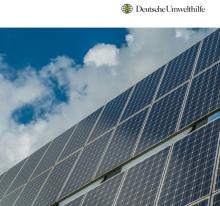
Every year, huge numbers of photovoltaic (PV) modules are being installed. This solar energy expansion greatly furthers the ecological transformation of the energy system. But to solve the climate crisis every aspect has to be taken into consideration. This is why this white paper wants to shine light on challenges currently occuring or to be expected in connection with used photovoltaic modules and their disposal in Germany.
To better implement the goals of a circular economy, this paper will retrace the steps in the lifecycle of a photovoltaic module and analyse problems and possible solutions along these stages. After a brief description of the occuring challenges, opportunities and solutions deemed to be effective and sensible in these matters are presented.
Renycle® is a product obtained from recycled nylon 6, a highly valued material because of its excellent resistance, dyeability, softness and versatility.
ReNewTex is an innovation network aiming to help tap synergies and graduallytransform the carpet and rug industry from a linear to a circular business sector.
It works as a moderated matchmaking platform where people can connect to further common ideas and needs through technological projects. After finding the topics, it supports companies in finding the right investment strategy and getting the project going.
ReNewTex hosts talks on sustainability or on specific topics. ZENIT, the agency for innovation and European affairs of the German State of North Rhine-Westphalia, moderates the talks, looking for new members and support with project planning and funding.