The transformation into a circular economy entails factoring resource flows into production, sales and consumption processes and thus massively reducing the use of materials (raw or otherwise), as well as the volume of waste and the strain on the environment.
Austria's circular economy strategy therefore aims to:
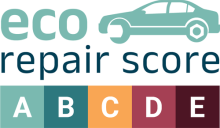
Eco Repair Score NV and VITO have developed the Eco Repair Score® to assess the environmental impact of a specific car repair job. It does this using a single score, with categories from A to E and associated colour coding.
The innovation cluster Circular Saxony aims to re-design products and processes in line with circularity and sustainability, while lowering the costs of society's transformation towards climate neutrality.
It brings together industry, research and policy representatives in thematic working groups which will work on practical solutions within the region of Saxony.
Goals:
Foster collaboration across sectors and technologies among SMEs, large enterprises, research organisations, associations and policymakers in Saxony
Transfer knowledge
Facilitate projects for members
Set up pilot lines and digital networking technology
Increase quota of materials kept in the loop for all relevant materials
Blue Plastics technology, called CleanBlueTech, is a pioneering, solvent-based, closed-loop washing technology that removes smell, glue, print-ink and organic residues from any plastic flexible film waste.
CleanBlueTech is a game changer as it uses 70% less energy and 100% less water than existing technologies.
Neue Effizienz is an institution for knowledge transfer and research in the area of energy and resource efficiency based in Wuppertal, Germany. As a regional association, it is funded by the municipalities, public utilities and regional economic development institutions of Wuppertal, Solingen and Remscheid.
It promotes innovation as well as science and technology transfer in the fields of energy, circular economy, new mobility and smart cities.bergisch.metall, a competence network for the metal industry, fouses on the circular economy; the bergisch.circular project assists the municipalities with the establishment of intermunicipal structures and initiatives supporting the circular transformation.
The Ocean Package UG is a young and sustainable company from Munich with the goal to make e-commerce more environmentally friendly and sustainable. For this purpose, they have designed reusable packaging made of recycled polypropylene, which contains a proportion of collected plastic from the North Sea. Their product can be used 20 times more often than conventional cardboard packaging.
SuperDrecksKëscht has developed the concept of resources potential certification of demanufacturing plants. It allows for product-related evaluation of treatment, recycling and disposal plants including actual volumes of raw materials recovered and the proportion used for energy generation.
WaVa - Co-products Marketplace is a chemical exchange platform where professionals can sell their manufacturing co-products or buy raw materials. It matches up supply and demand.
Any industrial raw material, waste, by-product or manufacturing co-product can be traded on the WaVa platform, but its chief focus is managing and processing chemical by-products. It aims to help people achieve their circular economy objectives and thus reap the economic and environmental benefits.
WaVa is not recognised as a waste disposal facility; it simply connects buyers and sellers. It never actually takes ownership of the product.
Many actors see the EU’s circular economy (CE) as a promising narrative which steps outside dominant end-of-pipe solutions towards an encompassing vision for strategies across the supply chain. However, this study finds that the EU CE Action Plan maintains the status quo narrative instead of suggesting radical changes.
By focusing on stakeholder narratives, this analysis shows that the inertia is primarily due to CE proponents’ self-perception of being in a legitimacy crisis and their strategic arguments that have:
concealed social conflict and potential trade-offs
strengthened the agency of ‘status quo’ agents
excluded alternative voices questioning the proposed CE narrative.
The paper discusses how to develop new environmental narratives outside the status quo.