ReKáva gives spent coffee grounds a second life by creating local circular solutions for this valuable organic by-product.
They collect the grounds from Prague-based companies and use it in compost for community gardens, and sell Growkits which enable people to grow oyster mushrooms in their own coffee grounds.
In June 2026, the German federal government adopted an action programme to accelerate the circular transition. This is in line with the 2024 National Circular Economy Strategy.
Key points:
A platform for finding partners for projects and mobilising private capital.
The new funding programme Future Circular Economy will support innovative production processes, CRM recovery and digital applications from the end of 2026.
Recycled products will be given priority in public procurement.
A digitisation initiative covering DPPs, new data rooms and AI applications.
Legal improvements, such as a new national textile law and the intended ban on disposable electronic cigarettes, the amendments to the Circular Economy Act, packaging law and the Substitute Building Materials Ordinance.
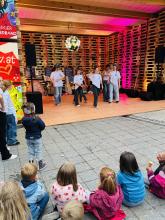
Vorarlberg's annual Environmental Festival is designed to produce as little waste as possible, to promote reuse and generally to familiarise people with the concepts of the circular economy without preaching about it.
People come for the festival experience but leave having learned why it's a good thing to donate what you don't need and not to produce extravagant amounts of waste!
The SUSTRACK Toolkit was developed under the Horizon Europe project SUSTRACK.
It provides practical tools, policy briefs, case studies and guidance to help policymakers, businesses and researchers accelerate the transition to a circular and sustainable bio-based economy.
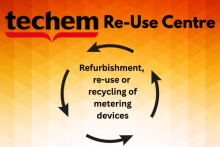
Energy services provider Techem has set up a Re-Use Centre promoting a circular, resource-efficient approach to equipment management in the building sector.
Decommissioned metering devices are brought to a centralised facility, evaluated and directed towards refurbishment by manufacturers, reuse of functional devices or components, or recycling of non-reusable materials.