The Taskforce for climate neutral and circular materials and products was launched at COP26 in September 2021, convened by the Cambridge Institute for Sustainability Leadership

It aims to influence policy discussions by enabling progressive businesses across sectors and value chains to join forces. It brings together companies committed to using climate neutral and sustainable materials and which are raising awareness about the need for EU measures to help decarbonise materials.

The key objective is to drive the development and implementation of and support for more ambitious, future-proof policies, programmes and initiatives in Europe with a view to creating an ecosystem moving rapidly away from the energy- and resource-intensive production of materials.

The Transition Pathway for the Textiles Ecosystem was published on 6 June 2023. It is an EU initiative which seeks to build a greener, more circular and digital future for the textiles ecosystem and to make it more resilient and competitive. The pathway, the outcome of a co-creation process with stakeholders, is a comprehensive framework that identifies specific actions. 50 actions have been outlined within eight building blocks, with a timeframe for implementation and a clear picture of the key actors involved. This is a call for commitments.

Upload document

Closing the Circularity Gap in Denmark

The Circularity Gap Report Denmark
Type
Author
Andrew Keys (Circle Economy)
Ana Birliga Sutherland (Circle Economy)
Jana Rué Glutting (Circle Economy)
Megan Murdie (Circle Economy)
Publication Date
08/2023
Country
Netherlands
Language for original content
Key Area

Denmark is already excelling in many areas of sustainability, positioning itself as an ambitious frontrunner in the race to net-zero. It already boasts mostly renewable electricity generation, with targets to achieve 100% green electricity by 2027 and entirely renewable energy by 2050.

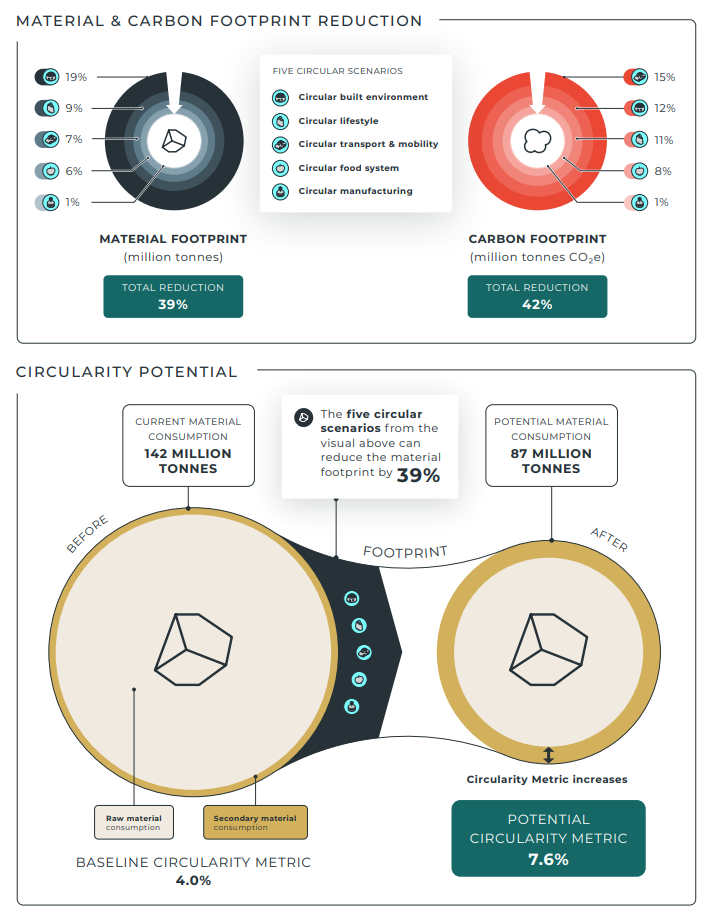
The Circularity Gap Report on Denmark reveals that the country’s economy is 4% circular. This figure is defined by very high material consumption - 24.5 tonnes of virgin materials per person per year. This puts the country above both the European average of 17.8 tonnes per capita and the global average of 11.9 tonnes per capita.

The report also lays out five circular pathways for Denmark that have the potential to cut its material and carbon footprints by roughly 40% each.

Material an carbon footprint reduction


Upload document

Assessing Climate Impact: Reusable Systems vs. Single-use Takeaway Packaging

Reusable Systems vs. Single-use  Takeaway Packaging
Type
Author
Zero Waste Europe
Reloop
TOMRA
Publication Date
09/2023
Country
Belgium
Language for original content
Sector
Reusable take-away packaging

Zero Waste Europe, Reloop, and TOMRA, with the contribution of  Eunomia Research & Consulting Eunomia, have published a study on reusable take-away packaging and its potential for significant greenhouse gas emission reductions compared to single-use alternatives.

The study examines various packaging types (cups, burger boxes, bowls, pizza boxes, sushi containers, etc.), highlighting emissions reduction potential with efficient return, washing and redistribution systems, with a view to 2030.

The study involved modelling to measure the greenhouse gas (GHG) emissions from reusable takeaway packaging compared to single-use ones.

The results indicate that reuse has potential to yield greater environmental benefits than recycling or discarding take-away packaging in Europe.

Biodiversity and Climate change are interconnected issues, with ecosystems and biodiversity playing a crucial role in regulating our climate. Circular procurement can contribute to mitigating climate change and preserving biodiversity by minimizing greenhouse gas emissions and protecting natural habitats.

Join us on 20 October 2023 at 10:00 - 12:30 CET for an inclusive dialogue and collaboration with stakeholders to bring together a diverse range of participants to work towards our circular economy goals. Our panellists will delve into the synergies between Circular Procurement and Biodiversity/Climate, two crucial topics for sustainable development.

Country
Other (China)
Target audience
Language for original content
Key indicators
Specific needs

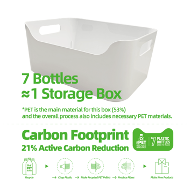
Energy Expert, an Alibaba Cloud company, uses carbon footprint accounting combined with digital technologies to track the CO2 performance of a new range of products, from the initial plastic waste to the final rPET product, and makes the information available to the consumer.

Join this workshop on 10 October on citizen engagement during the 2023 European Week of Regions and Cities in Brussels! The event is organised in collaboration with the EU projects ARV, syn.ikia, oPEN Lab, and the FinEst Centre for Smart Cities.

Subscribe to