The circular economy is attracting significant interest worldwide, as evidenced by the numerous government strategies, business commitments and partnerships devoted to its development. At the EU level, the Action Plan for the Circular Economy and several other policy documents have demonstrated a strong commitment to move towards a low-carbon and circular economy. While the calls for a new economic model grow louder, it is clear that the transformation of markets and industries on a large scale will not be an easy achievement. It will require well-designed and ambitious policies to foster the transition as well as new business models. Against this background, CEPS brought together executives from major multinational companies as well as representatives of business associations and others.
The Strategy for Promoting Green and Circular Economy of the Government of Catalonia aims to foster sustainability as a strategic area to attain economic recovery, increase competitiveness, create jobs, and reduce environmental risks. It is structured into key policies' areas for promoting green and circular economy: the generation of demand and creation of markets, the improvement of the access to funding, the stimulation of research, development and innovation, the boosting of internationalisation and the promotion of employment and entrepreneurship. This strategy therefore contextualises the concept of green/circular economy in Catalonia. At the same time, it is a strategic roadmap that establishes the main areas of work for the medium-term, essential to promote this model in Catalonia.
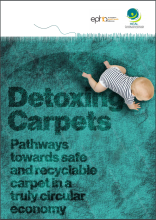
Toxic substances linked to a range of adverse health impacts can be present in carpets sold in the European Union, the European Public Health Alliance and the Health and Environment Alliance warned today following a new study by Anthesis. The study identifies over 59 hazardous substances found in carpets sold in the EU, including endocrine disruptors and carcinogens, linked to serious health conditions such as cancers, learning disabilities and fertility problems.
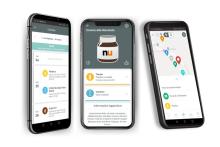
The Junker app recognises products with a single click on their barcode, and provides people with all the information they need to recycle their components correctly and quickly. It makes waste disposal easy!
Printer cartridges are seen as a single-use product by printer and cartridge Original Equipment Manufacturers. The DKWU Network is working to change that.
Interface's carpet tiles are designed along circular lines, and their ReEntry® programme ensures that old tiles are reused, recycled or used for energy from waste.
Volpy was an all-in-one ethical and environmental innovation on the smartphone market: customers could have their smartphones valued, return them and exchange with others directly through an app.