A report by the Informal Commission Expert Group “Support to Circular Economy Financing” (E03517)
This report has greatly benefited from the comments and contributions by Arnold Verbeek, Christian Schempp, Gianpiero Nacci, Philip Marynissen, Frido Kraanen, Rebeka Kovacic and Laura Busato.
The transition to a circular economy is at an early stage in the EU.
Regulations, markets and investment tools, including financial risk assessment, are adapted to linear models. Generally speaking, externalities linked to linear business models are not taken into account. This poses a problem for emerging circular models, which have to contend with the challenge of accessing finance, as the financial sector sees circular projects as highly risky.
To improve the conditions for financing CE projects, the Expert Group on Circular Economy Financing identified the main areas where incentives are needed, addressing recommendations to policy makers, financial institutions and project promoters.
Knjižnica alata is an initiative in Beli Manastir, Croatia, which was started seven years ago by Duško Kostić. This project is the only one of its kind in the country, and consists of a tool library where people can borrow the tools they need.
The cooperative company Tradecowall manages construction and demolition waste in the Belgian Walloon region and comprises a network of companies working with inert waste recycling centres in the region.
The Intermunicipal Community of the Tâmega e Sousa is a public entity composed of 11 municipalities in Northern Portugal. It has developed a circular project aiming to enhance circular economy achievements and green transition agendas within local authorities, municipal companies and intermunicipal entities. In this regard, it has created the manual Economia Circular nas Compras Públicas on circular economy in public procurement to assist municipalities.
The manual presents an in-depth mapping of circular economy practices for a Portuguese strategy for ecological public procurement, as well as indications on how to address the circular economy challenge, with a range of criteria and procedures for public procurement.
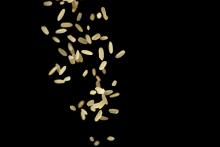
The RiceRes research project, launched in 2016 by the CNR (National Research Council) and the Universities of Milan and Pavia and financed by the Cariplo Foundation, aimed to make the most of waste materials from processing Italian rice.
Ligeti Bolt is a packaging-free grocery shopin Budapest. The shop does not sell any products in plastic wrapping or packaging and so customers buy exactly the amount they need.
Buurman is a hardware store and workshop that only uses secondary materials, such as wood from demolition sites and insulation materials, plywood and cables from construction sites in Rotterdam or from exhibitions and festivals.
EtMoi@Work is a Belgium-based circular, social, economy project. It consists of the production of a collection of office articles: badge holders, card holders, cushions for office chairs and new masks in silk by local prisoners. It is a circular economy project, since all its productions use recycled conference lanyards, silk ties and scarves that are no longer worn and, if possible, old jewelry.
Charity shops are the most basic form of circular economy-driven supply chains:people donate unwanted items rather than throwing them away so that they can be put to use by someone else. La Poubelle is a variation on the theme of charity shops: it's a goods bank tailored specifically to the needs of people facing hard times.