A new European Commission publication shows how buildings professionals can contribute to the New European Bauhaus movement for sustainable living, inclusiveness and aesthetics with help from Level(s), the EU framework for sustainable buildings.
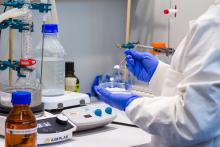
Blue Plastics technology, called CleanBlueTech, is a pioneering, solvent-based, closed-loop washing technology that removes smell, glue, print-ink and organic residues from any plastic flexible film waste.
CleanBlueTech is a game changer as it uses 70% less energy and 100% less water than existing technologies.
This working paper outlines how a circular economy (CE) can help avert the climate crisis. It outlines nine calls-to-action to take to maximise CE benefits in order to help limit warming to 1.5 ̊C and avoid the worst impacts of climate change.
Shift consumption patterns
Stimulate product circularity from the design phase
Incorporate circularity across clean energy value chains
Integrate CE strategies into national climate policies and plans
Incentivise cross-border greenhouse gas emission reductions
Connect CE metrics with climate change impacts
Increase transparency and comparability in modelling methodologies
Apply systemic and context-specific impact assessment to inform decision-making
Investigate the role of CE in climate change adaptation.
UNEP and Global Fashion Agenda are holding a COP27 side event on Circular Systems for a Net Positive Fashion Industry in Sharm El-Sheikh, Egypt, on 12 November at 18:00 EET. This in-person talk show event with industry leaders will discuss the path to a circular fashion system, from circular design to business models and recycling to public behaviour.
The World Circular Economy Forum 2022 presents circular economy game-changers. Hosted in Kigali and online on 6-8 December 2022, WCEF2022 is co-organised by the African Circular Economy Alliance, the Republic of Rwanda, the African Circular Economy Network (ACEN) and The Finnish Innovation Fund Sitra, with international partners. The title for this year's event is 'From Africa to the World'.
The European project BeonNAT aims to develop innovative biological products for the industry from the biomass of trees and shrubs grown on marginal land. The Plastics Technology Centre Aimplas will generate lactic acid and then polylactic acid PLA from fermentable sugars in biomass waste for use in packaging with active properties for cosmetics.
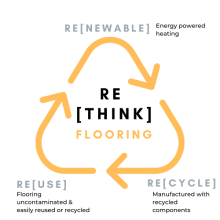
IOBAC avoids adhesive and attaches its flooring materials partly by means of magnets. Its Dual-Grip technology affixes flooring using both magnetism and tack. This means that tiles can be taken up and reused, keeping the components in the value chain, or recycled. The technology is manufactured using plant-based VOC-free resins, recycled rubber tyres and additives from scrap iron.
The Hungarian Ministry of Finance approved a HUF 197.85 million non-refundable grant for Hutoepito, the parent company of KleanLabs, in order to fund research, development and innovation activities under the Upcycling of closed-cell rigid polyurethane foams project, which ran until 31 January 2025.
Tarkett is pioneering post-use flooring recycling in Europe. It is working with IKEA to transform used Tarkett flooring from the IKEA Kungens Kurva store into new flooring.
The Ocean Package UG is a young and sustainable company from Munich with the goal to make e-commerce more environmentally friendly and sustainable. For this purpose, they have designed reusable packaging made of recycled polypropylene, which contains a proportion of collected plastic from the North Sea. Their product can be used 20 times more often than conventional cardboard packaging.