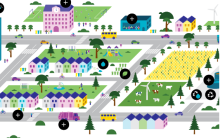
The HOOP project has provided Project Development Assistance to eight lighthouse cities and regions, supporting them with the development of large-scale urban circular bioeconomy initiatives focusing on making bio-based products from urban biowaste and wastewater. The partners have developed a suite of open-source tools to help cities and regions launch urban circular bioeconomy projects.
ADVANCE Circular is an Erasmus+ project, focusing on linking the tourism industry with VET (Vocational Education and Training) to embrace circularity. The brochure describes the project which aims to assess the readiness of the tourism sector and VET institutions for adopting circular principles in Bulgaria, Romania, Slovenia and Spain.
"Are we ready for circularity?" is part of the second stage (Mapping the Scene & Creating Bridges). It finds that despite progress in raising awareness of circularity, significant efforts are needed to overcome financial, educational and regulatory barriers. Strengthening strategic partnerships, increasing funding support and enhancing training opportunities will be vital to advance circularity readiness in the tourism and VET sectors in these countries.
Up2Circ is an international project funded by the European Commission’s Horizon Europe programme. The overall aim is to help European SMEs go circular.
The project assists SMEs: there are awareness-raising and training modules and information on how to apply for EU funding. The platform has prepared a catalogue of its success stories.
The platform is also building a network of stakeholders: people with access to many SMEs, expertise in a given sector and/or the circular economy, advanced technologies or social innovation. These people will have access to Up2Circ's tools for helping SMEs.
The website also has information on circular events. The project organisers have experience with assisting SMEs; with this project they are focusing on the circular dimension.
PRIMUS was a research project funded under the Horizon Europe programme, which ran from 2022 to 2025. It researched new polymer recycling technologies, with a view to producing new recycled materials that meet the requirements for manufacturing high value products.
It produced a webinar series on Boosting Plastic Recycling and a number of training courses.
The REFLOW project sought to understand and transform urban material flows, and to co-create and test regenerative solutions at business, governance and individual levels to create a resilient circular economy. Projects were carried out in six pilot cities, covering areas such as textiles and energy from waste.
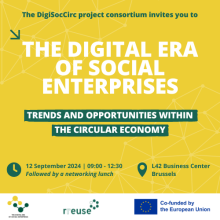
RREUSE, Europe’s largest network of social enterprises active in reuse, repair and recycling, is organising a conference to mark the end of the DigiSocCirc project, which aims to support, optimise and accelerate the role played by social circular enterprises in the digital era.
During the conference, the DigiSocCirc consortium will share the project’s key findings and facilitate panel discussions with representatives from social enterprises, businesses and policymakers.
TwinRevolution is a European project working on developing a training curriculum to facilitate the implementation of the twin transition in manufacturing industries. Their webinar will be an opportunity to share insights on the state of play of the twin transition economy in the furniture and textile sectors.
The ECO-FUTURE project was a 24-month transnational cooperation project on Teaching Circular ECOnomy to the FUTURE Generations.
It produced a series of educational tools in the field of the circular economy. The materials produced provide an upskilling pathway programme with which teachers can help 6-12 year old pupils explore the topic and values of the circular economy and sustainability.
The FOODY EU project promotes entrepreneurial skills and employment of young people, using circular economy principles to combat unemployment. It provides comprehensive information on the management and environmental impacts of food waste, using the food industry and waste management sector to instill in young people the value of resource conservation.
From its base in the northern Netherlands, JC-Electronics supplies new, refurbished and repaired industrial electronics. By giving used and defective devices a second life, the company contributes to the circular economy and helps customers reduce their carbon footprint.