This retrospective report is a review of the plans set out by Circular Flanders in the Kick-off Statement.
The most important finding? A good deal more was accomplished than initially anticipated. For example, the opportunity to launch three Open Calls, permitting the funding of over 130 innovative circular economy projects. The Green Deal on Circular Construction was also an unprecedented opportunity, as was the complementary reinforcement of the OVAM team of experts in ecodesign and area-specific operations, allowing the scope to expand.
This retrospective report is an interactive PDF. External links to downloads or online resources have been embedded on each project page for easy accessibility.
ENEA, the Italian National Agency for New Technologies, Energy and Sustainable Economic Development, is carrying out research into lithium-sulphur batteries to make them more competitive.
The CSCP, Sitra and DBU have set up the Consumer Insight Action Panel, a new European multi-stakeholder initiative designed to support the transition to the circular economy by generating, applying and testing consumer behavioural insights in circular strategies for textiles, plastics and electronics. How might we innovate to enable people to reuse, repair, share or recycle? Find out with us!
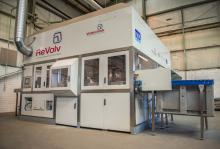
Votechnik has created a unique state-of-the-art recycling technology, the ALR 4000 machine, which safely removes hazardous waste materials from LCD flatscreen panels and monitors through a fully automated process.
The Challenges, Opportunities and Pathways for European Businessin Circular Economy report is a EUROCHAMBRES initiative launched in order to better understand if and how the circular economy will benefit European businesses, and to delineate a successful transition. This will be the basis for a policy strategy to contribute to an enriching debate on future legislative proposals at European level.
This report is a comprehensive meta-analysis of the most up-to-date quantitative studies on the circular economy, and elaborates on nine industrial sectors (agriculture, construction, mobility, hospitality and food services, metal manufacturing, electronics, textile, food & drink manufacturing, and plastics) including case studies.
Today, most electrical/electronic equipment (EEE) is not designed for recycling, let alone for circulation. Plastics in these products account for 20% of material use, and through better design, significant environmental and financial savings could be made. Technological solutions and circular design opportunities already exist, but they have not yet been implemented. Some challenges, such as ease of disassembly, could be resolved through better communication and by sharing learnings across the value chain. Instead of WEEE, we should focus on developing CEEE: Circular Electrical and Electronic Equipment. The case examples of this report show how different stages of the lifecycle can be designed so that circular plastic becomes possible and makes business sense.
On 5 July a a survey on consumer attitudes to reuse and recycling of electronic and food products was launched in the framework of the EU funded project CIRC4life.
The EU faces multiple challenges (climate crisis, environmental disasters, a lack of competitiveness, falling behind in the digital race, etc.) that it will need to address if it is to ensure long-term sustainable prosperity for European citizens. At the same time, there are two ongoing transitions – the creation of a circular economy and the digital transformation – that could provide the means to address these challenges, if they are managed well.
As the EU and national policymakers are making significant efforts to promote a circular economy on the one hand and a digital economy on the other, Annika Hedberg and Stefan Šipka, together with Johan Bjerkem, argue that it is time to align the agendas as a means to achieve greater sustainability and competitiveness.